
Imagine you're at an exclusive dinner in a Paris penthouse, overlooking the night-lit Seine, and the host brings out a bottle whose bubbles dance under the dim lights. You, with your glass in hand, don't want to be the one asking the obvious while the others nod knowingly. That's where this guide comes in, not as a rigid manual full of impossible technicalities, but as an intimate chat between friends who have sailed these seas of bubbles and tannins for years. I've been to those sophisticated soirees, from dusty cellars in Bordeaux to impromptu tastings on yachts anchored off the Côte d'Azur, and I tell it to you straight: the world of wine and champagne is not the exclusive territory of experts with trained noses., but a universe accessible to anyone who wants to enjoy without posturing or insecurities.
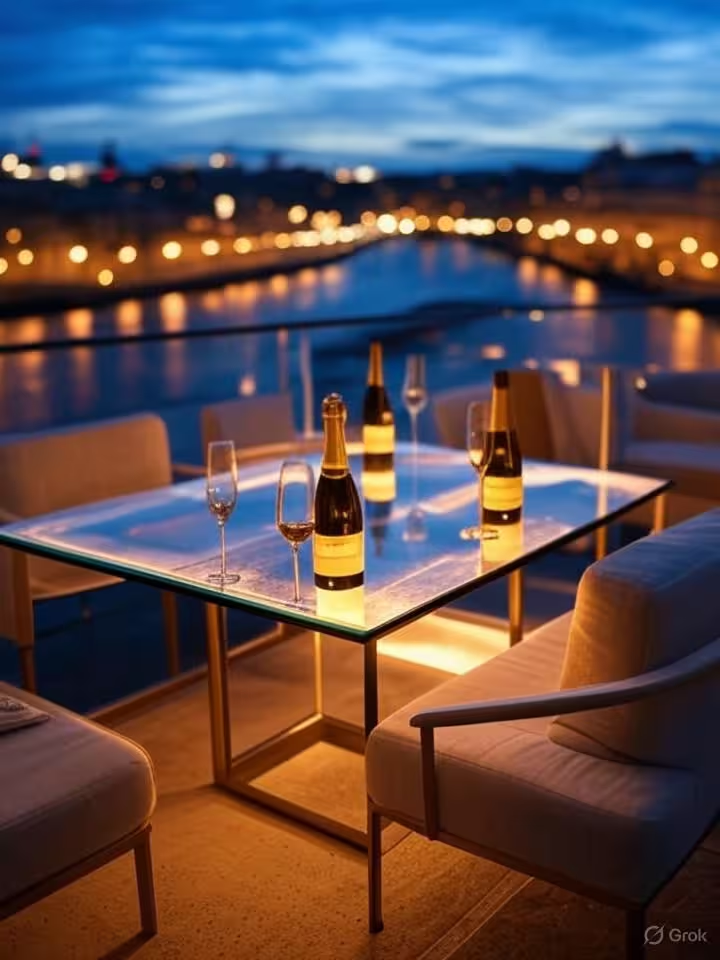
The reality is that in high-end circles, your ability to navigate a wine list with ease says more about you than your watch or your suit. It's not about memorizing vintages like a professional sommelier, it's about understand the rules of the game enough to move with confidence. As the legendary French chef once said Auguste Escoffier: «Good wine is a necessity of life for me.». And he was right, not only for pleasure, but because it is part of the silent language of the elite.
The universe of red wine: elegance in deep tones
Let's start with the basics, red wine. Think of it as the tailor-made suit of your closet: versatile, sophisticated, but with implicit rules that you must know. Reds come from dark grapes, and their deep, intense color comes from the skins that are left to macerate with the must during fermentation. This prolonged contact extracts not only color, but also tannins and aromatic compounds that define the wine's character.
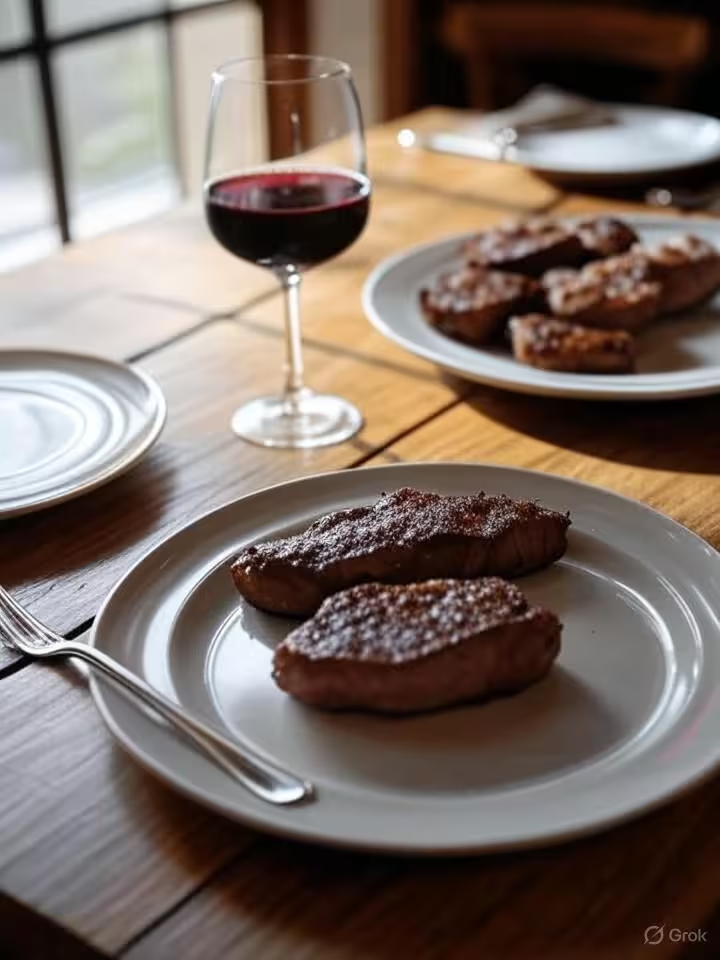
A Cabernet Sauvignon from Napa Valley, for example, hits you on the palate with powerful notes of cassis, black currants and an unmistakable hint of vanilla from its aging in American oak barrels. It is the ideal companion for a perfectly cooked roast beef at a weekend barbecue with influential friends, or for that business dinner where you need to project confidence. But beware, not all reds are heavy or dominant; A Burgundy Pinot Noir is lighter, almost ethereal, with notes of raspberry and damp earth reminiscent of the forest after rain. It is like a conversation that flows effortlessly, elegant without being pretentious.
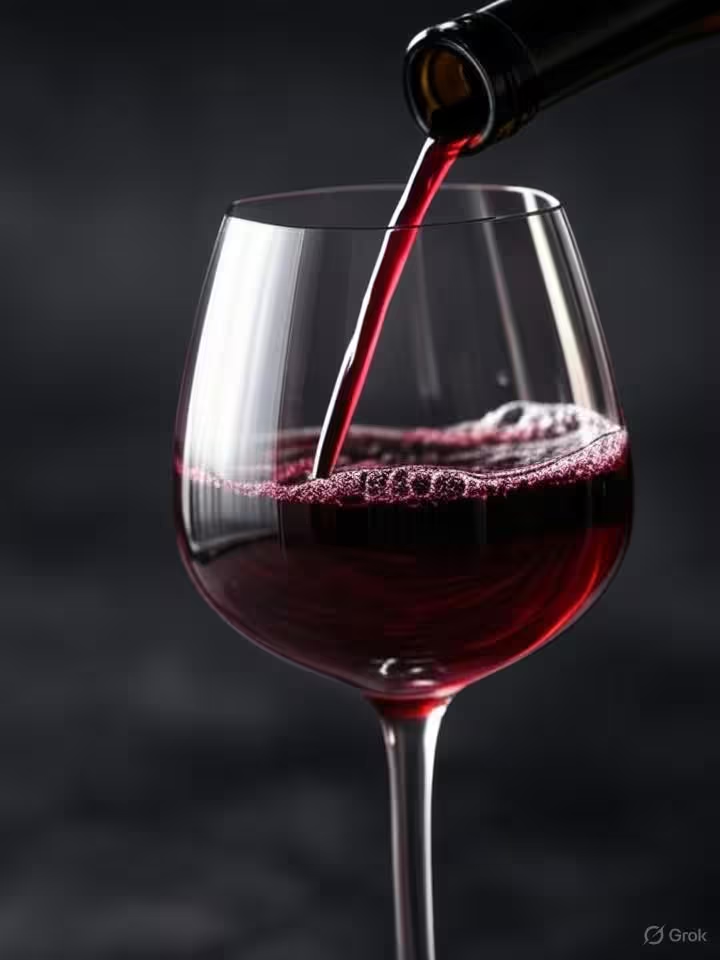
What no one tells you in the conventional guidebooks is that the terroir -that French word that may sound pretentious but simply means the combination of soil, climate and the hand of the winemaker- absolutely changes everything. I have tasted the same varietal grown in different regions and it is like comparing a passionate kiss with a subtle touch: both are valid, but the experience is radically different. An Argentine Malbec from Mendoza has a fruity and spicy power that you won't find in its more austere and earthy French version from Cahors.
Red wine varieties you should know
- Cabernet Sauvignon: Robust, full-bodied. Notes of cassis, green bell pepper and cedar. Ideal for red meats.
- Pinot Noir: Elegant and delicate. Red fruits, damp earth and subtle spices. Perfect with poultry and oily fish.
- Merlot: Smooth and accessible. Plum, chocolate and herbs. Versatile for multiple pairings.
- Syrah/Shiraz: Intense and spicy. Black pepper, blackberries and smoked bacon. Excellent with spicy dishes.
- Tempranillo: Spanish jewel. Ripe fruit, leather and vanilla. Balanced and sophisticated.
Personally, I remember an evening at a private villa in Tuscany, where the host served a Brunello di Montalcino 2010. That year had been complicated climatically, but the producer had achieved something magical: a wine that combined power with finesse, like a dancer who masters both tango and ballet. Those moments teach you that behind every bottle there are human decisions, calculated risks and, often, a bit of luck.
White wines: the unsung heroes of refinement
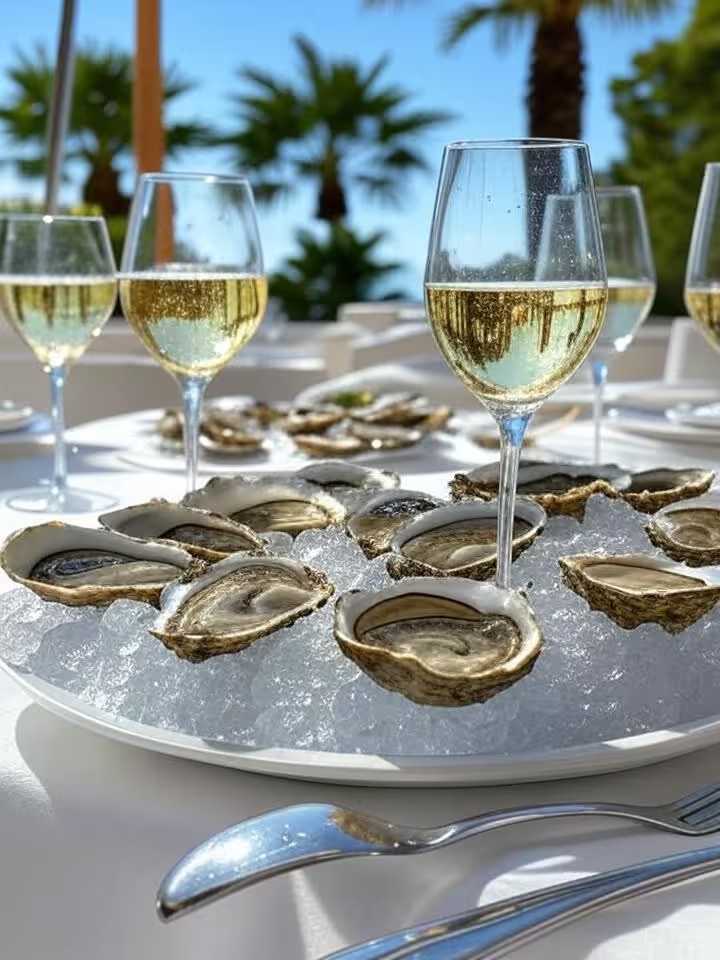
Now, let's move on to the targets, often underestimated in luxury circles, as if only red wines deserved serious attention. Blunder and, honestly, a sign of oenological ignorance. A Chardonnay well-crafted, perhaps from Chablis in French Burgundy, it is crisp, mineral and with a vibrant acidity that cleanses the palate like no red could. It is perfect for pairing with fresh oysters served on a Mediterranean terrace, where the midday sun calls for something refreshing yet sophisticated.
Imagine you're at brunch in Monaco, the sun filtering through the palm trees, and that glass of chilled white refreshes you without overwhelming your senses or hindering conversation. Or consider a Sauvignon Blanc from Marlborough, New Zealand, with its signature burst of citrus, fresh-cut grass and passion fruit, cuts through the fat of a creamy cheese board with surgical precision. Whites have a versatility that many people ignore, and mastering them gives you a considerable edge in high-level social situations.
Personally, I believe that whites are the unsung heroes of the wine world. At one of my favorite tastings, organized in a boutique winery in the Loire Valley, a German Riesling with a touch of residual sweetness balanced a spicy mango dessert that no one expected to work. The combination was bold, risky, but absolutely memorable. That's the magic of whites: their apparent simplicity hides a complexity that only reveals itself when you know where to look.
The full spectrum: from dry to sweet
I recognize the nuance that confuses many novices: not all whites are dry, The diversity can be disorienting when you're faced with an extensive menu. German Rieslings range from trocken (dry) to auslese (sweet), passing through intermediate graduations. A French Sauternes is deliberately sweet, perfect as a dessert wine, while a Muscadet from the Loire Valley is bone dry, almost saline.
My practical advice: taste and adjust according to your palate, not according to what some stuffy sommelier tells you that you «should» prefer. In my years moving in these circles, I have seen people reject superb wines simply because they didn't fit some arbitrary rule they read in a magazine. Taste is deeply personal, and in true luxury, confidence in your own preferences is more valuable than following fads.
Champagne: the universal language of celebration
And speaking of bubbles, champagne is the undisputed king of celebrations and the ultimate symbol of liquid luxury. But beware: it is not simply generic sparkling wine. It is a protected designation of origin, exclusive to the Champagne region in northeastern France. Everything else, however good, is technically sparkling wine, not champagne. This distinction is not empty pedantry; it is geography, tradition and, above all, method.
Think about Dom Pérignon, not the 17th century Benedictine monk (although we owe him the name), but the iconic bottle that evokes pure luxury from its first appearance. Its fine, persistent bubbles, which rise elegantly in the glass, come from a second fermentation that occurs inside the bottle itself, an artisanal process that can take years or even decades for the best ones. vintages. I opened one at a post-gala party at a historic hotel in London, and that one pop The characteristic sound was like a silent applause that marked the beginning of a memorable night.
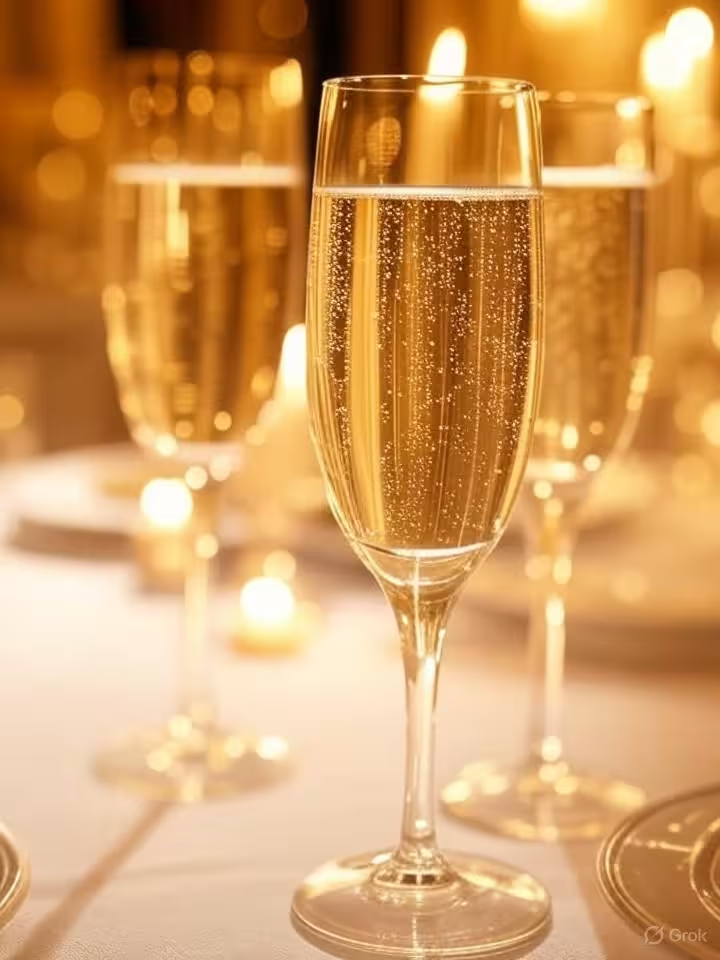
As the legendary Coco Chanel: «I only drink champagne on two occasions: when I'm in love and when I'm not.». This phrase perfectly captures the versatility and timeless charm of French bubbles. But here comes the honest part that many experts fail to recognize: not all champagne is sweet, In fact, the majority of those served at high-level events are brut (dry) or even brut nature (extra dry, no sugar added).
Beyond Champagne: other quality sparkling wines
Beware of falling into uncritical snobbery. There are fabulous sparkling wines outside the Champagne region that deserve your attention and respect. A Prosecco Italian wine from Valdobbiadene, light and fruity, is perfect for a casual evening on a Roman terrace, especially as an aperitif. A Cava quality Spanish champagne, made by the same traditional method as champagne but with native grapes such as Macabeo and Parellada, can have more body and complexity than many basic champagnes from large commercial houses.
Don't fall into the trap of thinking that only the most expensive champagne is worthy of important occasions. Sometimes, a good Gran Reserva cava served in a simple but elegant glass tastes better and is more appropriate than a presumptuous vintage in Baccarat cut crystal. The key is understand the context and the occasion, not in blindly following price hierarchies. In true luxury, authenticity always trumps empty ostentation.
The art of choosing: navigating wineries and wine lists
Transitioning to the practical aspect, because theoretical knowledge is useless if you do not know how to apply it when you find yourself in front of an intimidating wine list or walking the aisles of a specialized wine shop. In a select winery or a high-end restaurant, don't just look at the price -although, yes, there is often a correlation between cost and quality, especially in wines from recognized producers–.
Look at the vintage, that number that indicates the vintage year. An excessively rainy year can dilute flavors and produce unbalanced wines, while a sunny season with just the right balance of water concentrates all the aromas and natural sugars. I vividly recall an experience in Tuscany, during a visit to a small family winery near Montalcino. We tasted a 2010 Chianti that was frankly disappointing due to the adverse weather conditions that year, but the same producer poured us his 2015 vintage and it was like experiencing liquid poetry on the palate. The difference between the two bottles was abysmal, and they came from the same vineyard, with the same hands making them.
The sensory ritual: how to taste correctly
Use all your senses in a deliberate sequence: first observe the color and clarity by turning the glass against a white surface. Then smell deeply, bringing the nose to the rim of the glass without touching it. Swirl the wine gently to oxygenate it and release more complex aromas. Finally, sip a small amount and let it run through your mouth before swallowing or spitting (in professional tastings).
What no one tells you in the basic guides is that the wine is constantly evolving in the glass. A red that at first seems closed and tannic can open up spectacularly after ten or fifteen minutes of aeration. Give it time, like a good relationship that needs to mature. I have seen amazing transformations in wines that initially seemed disappointing but revealed hidden layers of complexity with a little patience.
- Visual: Observe color, intensity and clarity. Older wines tend to have russet tones in reds and golden tones in whites.
- Olfactory: Identifies primary (fruit), secondary (fermentation) and tertiary (aging) aromas.
- Gustative: It evaluates the initial attack, the development in the mouth and the persistent finish.
- Tactile: Consider the texture, body and feel of tannins in reds.
Pairing: the subtle art of gastronomic harmony
Let's go beyond the basics and get into the real art: the pairing. This is not an exact science with mathematical formulas, but a creative exploration that admits boldness and experimentation. Yes, a robust Argentinean Malbec with a traditional asado is an obvious and effective combination, but try something unexpected: a Syrah Rhone with high quality bitter chocolate. The black pepper characteristic of Syrah enhances the cocoa nuances in ways you wouldn't anticipate until you taste it.
In the context of the dating exclusive and the unwritten rules of elite circles, These details matter enormously. You genuinely impress your date when you order a wine that subtly complements the menu without overpowering it or overshadowing the conversation. Imagine an evening in a classic Parisian bistro, with white linen tablecloths and candlelight: you choose a Sancerre mineral white for the seafood starters, then you transition to a Pomerol Bordeaux, more elegant than powerful, for the main course of lamb. It is subtle, shows knowledge without unnecessary showing off, and above all, demonstrates that you care about the whole experience.
Personally, I have witnessed romances blossom over a judiciously shared bottle, because quality wine sparks deep conversations and creates intimate atmospheres that facilitate authentic connection. It's not the alcohol per se, but the shared ritual, the mutual attention to the moment, the joint appreciation of something exceptional.
Bold combinations that work
- Semi-dry Riesling with spicy Thai food: The slight sweetness balances the spiciness.
- Champagne brut with fried fish: The acidity and bubbles cut the fat perfectly.
- Pinot Noir with salmon: The soft tannins do not overwhelm oily fish.
- Vintage port with blue cheese: Sweetness and salinity in perfect harmony.
- Albariño with ceviche: Acidity with acidity, freshness with freshness.
Cultural references and the historical dimension of wine
We cannot talk about wine and champagne without recognizing their cultural and historical weight. Remember Ernest Hemingway, who drank red wine in his adventures in Spain and immortalized it in works such as Fiesta (The sun also rises), where wine is almost just another character. Or the legendary Gatsby parties in Fitzgerald's novel, where champagne flowed like golden rivers, a symbol of excess but also of aspiration and glamour.
These literary moments capture something essential: wine is not simply alcohol, it is history condensed into liquid., is bottled geography, it is the work of generations of families who have tended the same vineyards for centuries. When you uncork a bottle of Château d'Yquem, you are not just drinking sweet Sauternes wine; you are connecting with a tradition that dates back to the 16th century.
Italian film director Federico Fellini he once said: «Wine is the intellectual part of a meal, meat and vegetables are just the material.». This perspective elevates wine beyond its role as an accompaniment, making it a cultural and social protagonist. And he was right: at the great tables of history, from Roman banquets to modern diplomatic summits, wine has been a silent witness and facilitator of decisions that changed the world.
Necessary honesty: moderation and risks
But let's be honest, because integrity requires recognizing the less glamorous aspects as well. Drinking in moderation is absolutely crucial in these high-level circles, where your reputation can be built for years and destroyed in a single night of excess. One drunken slip can ruin professional relationships, business opportunities and personal bonds faster than any bad deal or bad business decision.
I have witnessed titans of industry, brilliant and successful people, stagger their carefully cultivated image by one glass too many at the wrong time. Wine should amplify your presence, not cloud your judgment or compromise your natural elegance. Know your personal limits and respect them with discipline, especially when you are in public or in situations where you are expected to project control and sophistication.
Moreover, it is essential to remember that in the world of true luxury, true elegance is never ostentatious or careless. Those who constantly need to demonstrate their oenological knowledge through pedantry are precisely those who hide the most insecurities. Real confidence is manifested in naturalness, in that ability to enjoy without fuss or the need for external validation.
Warehousing and service: the details that make the difference
Let us now address technical but essential aspects: correct storage and service. These seemingly minor details separate the enthusiastic amateur from the true connoisseur. If you invest in quality bottles, you have a responsibility to treat them properly to preserve their potential.
Store the bottles horizontally to keep the cork moist to prevent it from drying out, cracking and allowing oxygen to enter, which would oxidize the wine prematurely. The ideal place is cool (constant 12-16°C), dark (ultraviolet light degrades aromatic compounds) and with controlled humidity (approximately 70%). Do not store fine wines in the regular refrigerator for prolonged periods; compressor vibrations and excessively low temperatures can damage them.
Optimum operating temperatures
Serves the red wines at room temperature, but be careful: do not heat them as if they were tea. Room temperature« in oenological terms means 16-18°C, not the 24°C of a heated room. If the wine is too warm, the alcohol dominates and the aromas become muddled. If it is too cold, the tannins harden and the flavors close down.
The whites and champagnes should be served cold, but not frozen to the point of anesthetizing the taste buds. Between 8-12°C is the ideal range for most. A common mistake I witnessed at an elegant dinner was when a well-meaning but misinformed host served a vintage champagne straight from the freezer; it was so cold that it lost all its aromatic complexity, wasting a bottle worth several hundred euros. Lesson painfully learned.
The type of glass also matters more than you think. A glass of Burgundy, The wide, balloon-shaped glass allows the complex Pinot Noir to oxygenate and release its delicate aromas. A glass of Bordeaux, The taller, narrower flute directs powerful wines to the back of the palate. Tall, narrow flutes for champagne are not ideal; tulip glasses allow the aromas to be better appreciated while maintaining the bubbles.
Exploring lesser-known territories: broaden your horizon
Don't limit yourself to the classic options that everyone knows. The world of wine is vast and full of hidden treasures waiting to be discovered by curious palates and open minds. Taste a Grüner Veltliner Austrian, white with notes of white pepper and citrus, perfect with sophisticated Asian cuisine. Or a Gewürztraminer German shepherd, intensely floral and exotic, which combines surprisingly well with foie gras.
Explore the wines of Greece, where ancestral varieties such as Assyrtiko produce mineral whites of unique character, or those from Lebanon, where wineries such as Château Musar produce complex reds in extraordinary conditions. When it comes to champagne, don't stick to the big houses; look for small producers. grower-champagne that control the entire process from the vineyard to the bottle, offering more authentic and personal expressions.
A champagne rosé adds a romantic touch with its notes of strawberries and raspberries, as well as a slightly richer texture than whites. It is perfect for intimate dinners or private celebrations where you want to create a special atmosphere without falling into the predictable. What I personally love is infinite diversity; Each wine region tells a different story, reflects a unique terroir and preserves traditions that in some cases are millennia old.
Beware of counterfeits in the luxury market
But be careful, because where there is value and prestige, there are inevitably the fakes. The luxury wine market is rife with fraudulent bottles, from crude imitations to sophisticated replicas that can fool even experts. Especially in the ultra-premium segment, where a single bottle can be worth thousands or tens of thousands of euros, the incentives for fraud are enormous.
Rely solely on reputable suppliers with verifiable traceability. Major auction houses such as Sotheby's or Christie's have specialized wine departments with experts who authenticate each bottle. Established wine shops with years of reputation are also reliable sources. Be wary of offers that seem too good to be true: that half-price Romanée-Conti is probably a fake.
Always check the condition of the capsule, the label and the level of the liquid in old bottles. Research the production codes and the specific characteristics of each vintage. In this territory, ignorance can cost you not only money, but also credibility and social prestige when you discover that you have served a counterfeit in your own home.
Wine as a social bridge and connection catalyst
Beyond all the technical aspects, wine and champagne function as social bridges extraordinarily effective in elite environments. Sharing an exceptional bottle creates a moment of shared intimacy, a common sensory experience that facilitates deeper conversations and more authentic connections.
In my years navigating these circles, I have observed how a good bottle can break down initial barriers in business meetings, smooth out tense negotiations and create the environment for unexpected collaborations to emerge. It's not manipulation or Machiavellian strategy; it's simply recognizing that shared rituals bring people together in ways that words alone cannot achieve.
In the context of high-end dating, choosing the right wine shows consideration, cultural knowledge and the ability to create memorable experiences. It's not about the price of the bottle, but the appropriateness of the context: an elegant picnic in the vineyards of Champagne with a bottle of grower can be infinitely more romantic and memorable than an overpriced vintage in a loud and pretentious restaurant.
Final reflection: pleasure as the supreme objective
To close this extensive conversation -although I could go on for hours sharing anecdotes and discoveries-, I want to emphasize something fundamental that often gets lost among so much technicality and protocol: wine and champagne are, first and foremost, about pleasure and enjoyment, not about unattainable perfection or demonstration of knowledge.
Experiment without fear, make mistakes (preferably in private at first), discover what you really like rather than what you're supposed to like. Some of my best wine-related memories do not involve the most expensive bottles or the most prestigious appellations, but moments of genuine connection with people who appreciate the present moment.
As the British writer masterfully put it Evelyn Waugh: «Wine is one of the most civilized things in the world, and one of the natural things in the world that has been brought to the greatest perfection.». This duality - natural but perfected - perfectly captures the essence of what makes wine so fascinating and relevant in authentic luxury contexts.
In my years of moving around in exclusive environments, I have learned that the best bottle is always the one you share with someone who genuinely appreciates the moment.. It doesn't matter if it is a classified grand cru or a wine from a small unknown winery; what matters is the intention, the context and the company.
So raise your glass, you who are reading this right now, and toast to the basics that become extraordinary when approached with knowledge, respect and, above all, the willingness to fully enjoy. The world of wine awaits you, not as an exclusive club of inaccessible experts, but as a universe of sensory pleasure that only requires curiosity, openness and a little guidance to navigate it with confidence and style. Santé, as they would say in French wineries. Or better yet: health, because in the end, that's what it's all about: celebrating life with elegance and authenticity.

 English
  Spanish
  French
  Portuguese
  Italian
  German