
In the France of Louis XIV, the protocol of Versailles did not serve simply to impress: it was a silent language that revealed power, refinement and absolute control of the environment. Today, three centuries later, the true elite host doesn't need golden halls to show his class, but continues to master that same ancestral language of exquisite hospitality.
You've decided to open the doors of your home - whether to select professional circles, close friends or perhaps that person you met at one of those exclusive events where superficial conversations are conspicuous by their absence. Don't be fooled: this is not just a dinner party. It is a silent statement of who you are, A chance to demonstrate that you understand the delicate balance between ostentation and genuine warmth. As someone who has navigated these environments for years, I can assure you that true luxury lies not in how much you spend, but in the imperceptible details that transform an ordinary evening into an experience your guests will remember for years to come.
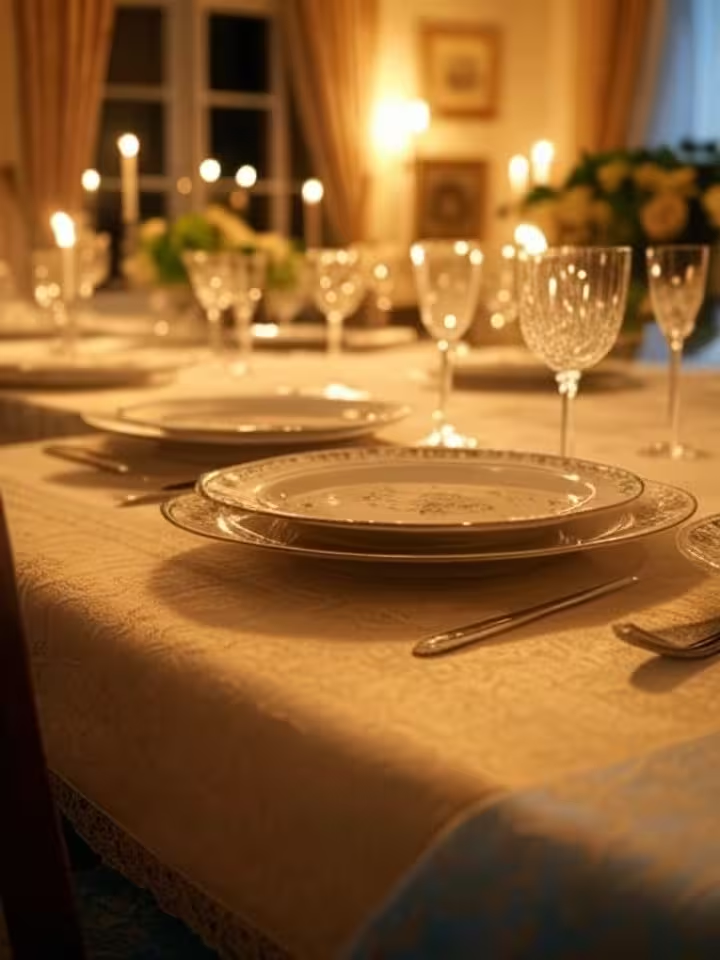
The Alchemy of Preparation: When Luxury is Hidden in the Invisible
It all starts long before the doorbell rings. The truly sophisticated host anticipates needs that his or her guests have not yet identified.. Think of the ambiance as a silent symphony: the dim lighting that flatters without revealing imperfections, candles scented with essences of oud or jasmine that evoke markets in Marrakech or gardens in Tuscany, the temperature calibrated to the exact degree where no one feels hot or cold.
I've been in residences where the host has neglected something as fundamental as air conditioning, and suddenly all of us present are sweating discreetly in Italian wool suits. But beware the opposite extreme. Once, at a Parisian gathering in the Marais, the landlord had hired a sommelier exclusively for that evening. It sounded impressive on paper, though, the experience ended up feeling more like a calculated demonstration than a genuine welcome..
As Coco Chanel wrote: «Luxury is not the opposite of poverty, but of vulgarity.». And there is something profoundly vulgar in performative excess, in hospitality that shouts its price rather than whispering its elegance.
The reality that no one admits publicly is that not all of us can afford private sommeliers or Michelin-starred chefs., And frankly, you don't need them. A carefully curated playlist-perhaps beginning with the modal jazz of Miles Davis and drifting subtly toward Chet Baker as the evening progresses-can create an equally memorable atmosphere. What distinguishes the exceptional host is not his or her budget, but their ability to create a coherent and authentic experience that genuinely reflects who you are.
The Invisible Elements that Make a Difference
Let me share some details that I have observed in the best European and American residences:
- Strategic fragrances: Never overpowering perfumes. Opt for subtle diffusers with notes of cedarwood, bergamot or white tea that are perceived only when someone stops to appreciate them.
- Layered lighting: Forget overhead lighting. Combine floor lamps, candles of different heights and perhaps a fireplace if the season permits. Light should caress, not undress.
- Accurate temperature: Between 20-22°C is the ideal range. Too cold and your guests will remain tense; too warm and drowsiness will kill the conversation.
- Ambient music: Never so loud that it interferes with conversation, never so low that silence is uncomfortable. The perfect volume is the one you only notice when it stops.
- Escape spaces: A balcony for smokers or nighttime contemplators, an impeccable bathroom with discreet amenities (not ostentatious kits that look like they were stolen from a luxury hotel), a library or study for more intimate conversations.
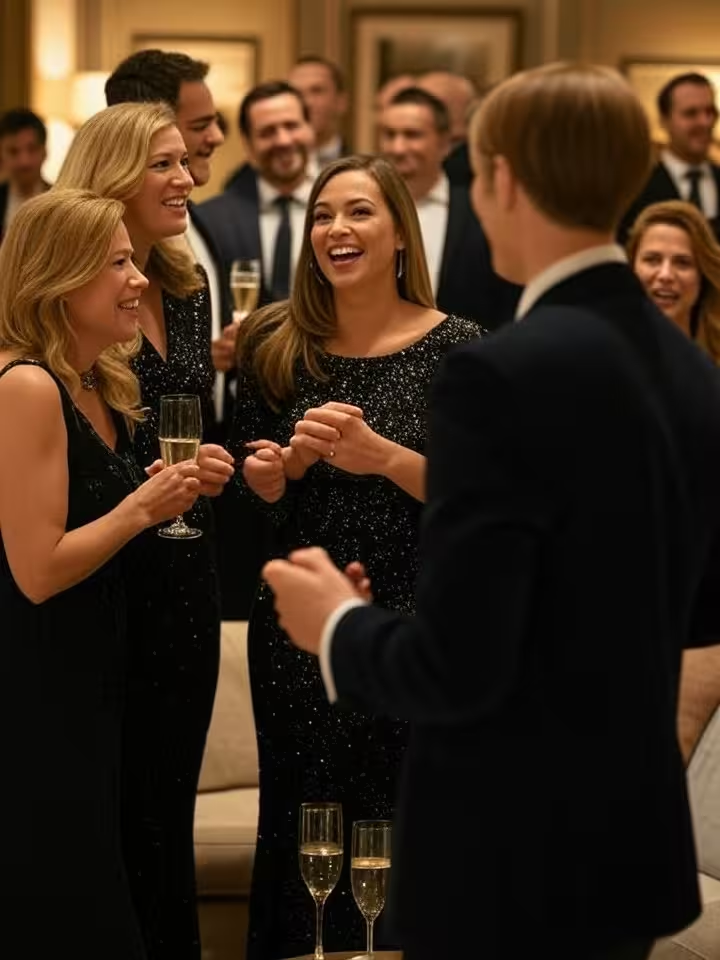
The Moment of Truth: The Reception that Sets the Tone
When the bell rings, your transformation should be instantaneous and complete. Open the door with a genuine smile -not that forced expression that characterizes corporate events-and welcome them as if they were exactly the people you most wanted to see at that moment. Because they should be.
He takes his coats with natural grace, offering a specific, observant compliment. «That perfume has notes of iris in it, doesn't it? It's exquisite» works infinitely better than a generic «how great you look.» The difference lies in specificity: shows that you really pay attention.
British designer Cecil Beaton used to say that «elegance is the elimination of the superfluous,» and this applies to your words as well. You don't need a welcoming monologue; you need condensed authenticity. I have hosted evenings where a guest would arrive visibly nervous-especially on situations that combine romantic interest with a formal setting- and a simple gesture such as immediately offering a glass of champagne along with a relaxed comment about the traffic or the weather can completely transform their mood.
What I have learned after countless nights as a host is that guests arrive with hushed expectations and, often, hidden nerves. Your initial job is not to impress them; it's to make them feel like they chose the perfect place to be that night.
The Invisible Dance: Orchestrating Conversations Without Directing Them
Once everyone has crossed the threshold, the real art begins. As host, your role resembles that of an invisible conductor: you facilitate harmony without anyone noticing your baton.
It circulates naturally, introduces people with shared but never obvious contexts. «You and Sebastian should have a conversation; you've both lived in Singapore, albeit in different decades. It would be fascinating to compare how it has evolved» works because it suggests a genuine connection without forcing it. Contrast this with the common mistake of forcing superficial introductions: «You both work in finance» is so vague that it kills the conversation before it's born.
Watch out for a real danger: I've witnessed hosts who try to bring strangers together as if they were solving a social crossword puzzle, and the result is a series of awkward silences punctuated by obvious questions. Authentic conversation is not manufactured; it is cultivated.. Create the right conditions-proximity, an interesting opening topic, perhaps an anecdote of yours that invites responses-and then bow out gracefully.
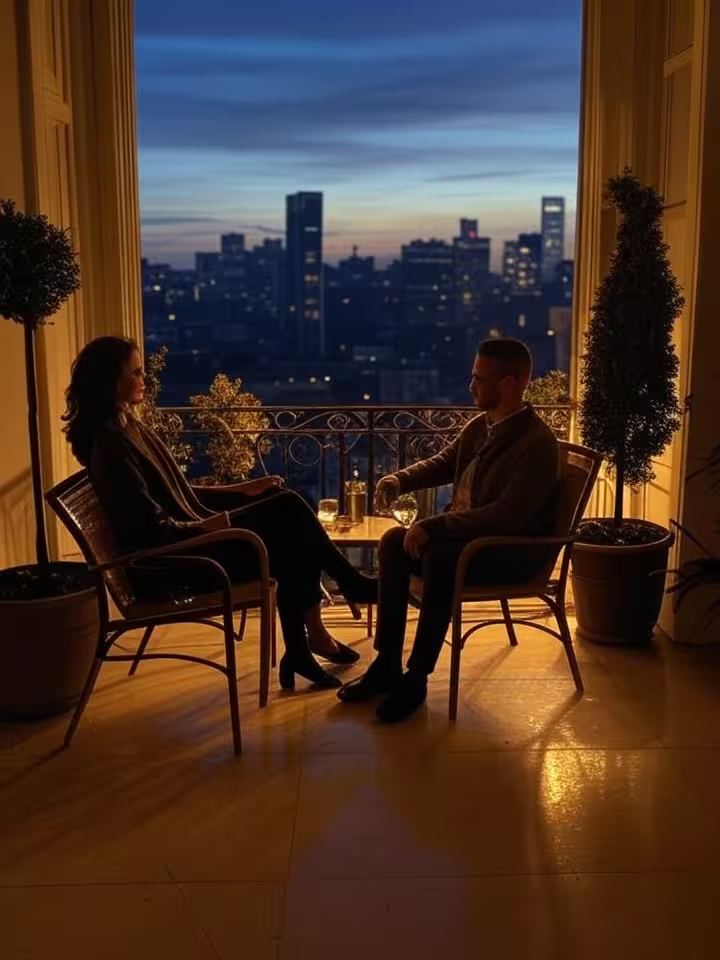
When Conversations Go Sideways: The Art of Subtle Intervention
Inevitably a dominant guest will emerge who monopolizes the conversation, or worse, some controversial topic that threatens to turn your elegant evening into a heated debate. This is where you distinguish the truly sophisticated host from the merely well-to-do.
I remember one night in my apartment when a discussion about European politics began to get dangerously heated. Instead of censoring directly, I digressed with a personal anecdote about a recent trip to Morocco, describing how he had witnessed Jews, Muslims and Christians sharing mint tea in a small cafe in Fez. The metaphor was obvious but not offensive, and he managed to redirect the energy without anyone losing face.
Other strategies that work:
- The open question redirected: «Fascinating perspective, Eduardo. Claudia, your experience in the cultural sector must give you a completely different view, no?»
- The change of physical setting: «Why don't we step onto the terrace? There's a spectacular moon tonight.»
- The introduction of a new element: «Perfect timing for serving dessert. It's a recipe I discovered in Kyoto...»
- Vulnerable confession: «I admit that this subject is beyond me; I prefer to listen to those who understand rather than pontificate from ignorance.»
As the writer observed Virginia WoolfA pleasant dinner is one where the mind is nourished as well as the body«. Your responsibility is to ensure that all minds present have a chance to be nourished, not just the loudest.
The Table as Theater: Gastronomy that Tells Stories
Contrary to popular belief, you don't need a Michelin-starred chef to create a memorable culinary experience.. In fact, some of my fondest gastronomic memories come from evenings where the host served something deeply personal: a risotto with black truffles from Périgord that he picked himself, accompanied by a Barolo wine that he had kept since the birth of his daughter.
What distinguishes an exceptional dinner is not its technical complexity, but rather its the accompanying narrative. Each dish should tell something: your last trip, a family tradition, a discovery at a local market. I have dined at some of the best restaurants in the world, I assure you that what makes a meal memorable is not the molecular techniques, but the emotional connection it generates.
That said, there are unforgivable mistakes you should avoid:
- Ignoring dietary restrictions: Send a discreet message before the invitation. Finding out that your vegan guest can only eat salad is humiliating for both of you.
- Excessively complex dishes: If they require three-minute explanations, you've failed. Food should be intuitive.
- Wrong rhythm: Too fast and it looks like fancy fast food; too slow and the energy fades. Allow 15-20 minutes per dish.
- Incorrect temperature: Nothing ruins an experience more than lukewarm food or wine at the wrong temperature.
The Ballet of Beverages: Beyond Alcohol
Keep the flow of beverages constant but never excessive. The perfect host anticipates empty glasses before his guests notice them. But here comes a crucial nuance that many ignore: contemporary luxury includes sophisticated non-alcoholic options with the same elegance as a signature cocktail.
I have noticed a significant generational shift: in younger elite circles, serving alcohol exclusively may seem anachronistic. It offers exquisite alternatives: artisanal kombuchas, mocktails with premium ingredients, waters infused with edible flowers. The important thing is to present them with the same reverence as a reserve wine.
And crucially: don't be the bartender all night. If you're constantly refilling glasses, you're not enjoying your own evening. Set up a fancy drink station where guests can help themselves, or better yet, discreetly recruit a couple of close friends to help out without making it look like hired service.
As the legendary bartender said Harry Craddock from the Savoy: «A good cocktail should be like a symphony: balanced, harmonious and with a memorable ending». The same applies to your entire selection of drinks.
Space as an Extension of your Identity
Your home should invite subtle discovery. It is not about showing off possessions, but about creating silent conversations. between your guests and the objects that define you.
A grand piano can generate magical moments if someone plays spontaneously (I've witnessed this in the Hamptons, transforming a formal dinner into an unforgettable bohemian evening). A well-curated library-with first editions worn from use, not pristine collections bought by decorators-invites those deep conversations that distinguish a memorable evening from a merely pleasant one.
But let's acknowledge an honest nuance: not all of us live in mansions with music rooms or two-story libraries.. In an urban apartment, a balcony with a view can become your star feature. A collection of travel photographs-especially those with fascinating stories behind them-can generate more conversation than any expensive piece of art.
What is essential is that the space reflects authenticity, not aspiration. Sophisticated guests instantly sense when they are in a lived-in home versus a showroom designed to impress. An heirloom piece of art with family history is worth infinitely more than a fashion piece purchased because the elite are «supposed» to have it.
Secret Nooks and Crannies that Save Evenings
Something I have learned from organizing evenings for two decades: you need strategic escape spaces. Not all of your guests will want to be constantly at the social epicenter.
- A balcony or terrace for the contemplative (and smokers, if any)
- A study or library for more intimate conversations
- An impeccable bathroom with discreet but quality amenities
- Perhaps a corner with comfortable seating and dim lighting for those who prefer to observe rather than participate.
These spaces allow your guests to modulate their own experience, transforming you from authoritative director to thoughtful curator.
The Art of Timing: When to Prolong and When to Conclude
One of the most common - and most embarrassing - mistakes I witness on a regular basis is the host who does not know when to end the evening. Guests begin to discreetly glance at their watches, conversations become stilted, and that magical moment you had created dissolves into collective discomfort.
The perfect timing varies depending on the context: a weekday dinner should end elegantly around 23:00-23:30; a weekend soiree can extend until midnight or beyond if the energy warrants it. But never, ever, hold your guests hostage to your hospitality..
Subtle signs of closure include:
- The strategic digestive: «An Armagnac to close the evening?» suggests conclusion without stating it.
- Transportation supply: «I have ordered some cabs for those who need them» gives permission to depart without guilt.
- The change of illumination: Very subtly increasing the main lights signals transition.
- Your own body language: Beginning to discreetly pick up minor items indicates completion.
And here comes something that the rules of social etiquette rarely mention: always offers safe transportation to those who have been drinking. Cabs, drivers, or even offering to call a premium service. This shows that your care for them transcends the doors of your home.
The Final Detail: Farewells that Last
The farewell is as crucial as the welcome, perhaps more so. It is the last taste you leave, the final impression your guest will take away..
A «It's been a real pleasure, I hope we repeat soon» accompanied by genuine eye contact is worth more than any elaborate gift. But speaking of gifts, a small detail - a bottle of olive oil from your last trip to Greece, a book you mentioned during the conversation, a jar of artisanal jam from that local market you're so passionate about - can transform a memorable evening into a legendary one.
The key is personalization. I've seen hosts who give generic, expensive branded gifts, and while the gesture is appreciated, it lacks soul. Contrast that with the host who gives you something specifically chosen because he paid attention during the conversation: «You mentioned you loved bergamot; I found this tea in Milan last week.».
As the iconic American hostess said Babe PaleyThe truly elegant should never be remembered for what he wears, but for the charming effect of his presence«. Your goal is not to make them remember your house or your food, but how they felt when they were with you..
When Things Inevitably Go Wrong
Let's be brutally honest: something always goes wrong. One guest is two hours late, another has an allergy you didn't mention, the conversation veers into uncomfortable territory, or the group chemistry just doesn't work as you anticipated.
This is where the truly exceptional host distinguishes himself: in grace under pressure. I have witnessed - and experienced - virtually every disaster imaginable:
- A guest who arrived drunk at a formal dinner party
- A political discussion that escalated dangerously
- A main dish that was completely burned
- A guest who had a family emergency and had to leave abruptly
- An inappropriate romantic confession between two engaged guests
In each case, what saved the situation was not having a perfect plan B, but having a perfect plan B. maintain composure and adapt with elegance. When the main course burned out, we transformed the evening into an «impromptu tapas night» with whatever was in the pantry, and it ended up being far more memorable than any planned menu.
Elegant vulnerability is a powerful tool. Admitting «This didn't go as expected, but let's make this an adventure» connects much more deeply than pretending robotic perfection.
The Context of Luxury Dating: When the Evening Is Also Seduction
If you are navigating the complex world of romance in elite circles, your home becomes a multi-dimensional statement. It reveals not only your aesthetic taste and organizational skills, but also your character, values and vision of intimacy.
I've talked to dozens of people who navigate these waters - some known at exclusive high-end events, others through select platforms - and the consensus is unanimous: the ability to create a cozy yet sophisticated space is infinitely more seductive than any material ostentation.
When you invite someone special into your home for the first time, you are saying, «This is my sanctuary, and I am inviting you to share it.» It's an act of vulnerability disguised as hospitality. That's why the details matter exponentially: that playlist you selected with her casually mentioned tastes in mind, that wine from the region where she grew up, that book by her favorite author strategically visible but not ostentatious.
Genuine seduction is never manipulation; it is genuine attention translated into action.. And in the context of contemporary luxury, where everyone has dined in the best restaurants and traveled to the most exclusive destinations, what is truly scarce is that personalized and non-transferable attention.
Final Reflections: Beyond Protocol, Towards Authenticity
After countless evenings as host and guest in some of the most exceptional homes in Europe and America, I have come to a conclusion that contradicts much of the traditional protocol.rules matter less than genuine intent.
You can follow every classic etiquette rule, serve the perfect wines at exactly the right temperatures, coordinate six place settings per diner, and still create a chilled and forgettable experience. Or you can quietly break a few conventions, serve comfort food instead of haute cuisine, mix in unexpected guests, and create an evening that people will remember for decades.
The difference lies in something intangible but deeply perceptible: Do you really care about the people in your space, or are they just props in your performance of sophistication?
As expressed by the designer Yves Saint LaurentFashion passes, style remains«. Paraphrasing: etiquette can be learned, but genuine hospitality is an expression of character..
Your goal in hosting guests should not be to have them admire your home, your food or your wine collection. It should be that, as they walk back across the threshold of your door into the night, they feel they have just experienced something special, something they cannot replicate in any exclusive restaurant or luxury hotel. Because what you offer is not a service; it is an extension of yourself.
And in a world where luxury has been democratized to a certain extent - where anyone with the means can book the best restaurant or buy the most expensive champagne - the luxury of the world has been democratized to a certain extent - where anyone with the means can book the best restaurant or buy the most expensive champagne. what is truly exclusive is the personalized, unrepeatable, genuinely human experience..
So the next time you invite, do so with the confidence of one who understands that technical details matter, but that the real magic lies in the generosity of spirit with which you open your door and share your world.. Because in the end, perfect protocol doesn't create memories; authentic people do.


 English
  Spanish
  French
  Portuguese
  Italian
  German