
There's a scene I witnessed at the Four Seasons George V in Paris that sums it all up: an American businessman was trying to impress a French art collector with his Harvard MBA and six-figure watch. She was nodding politely, with that Parisian smile that means absolutely nothing. Then someone walked up, uttered just three sentences in careful French about the latest exhibition at the Musée d'Orsay, and within five minutes they were sharing a glass of Château Margaux. The difference was not in money or credentials. It was in the language.
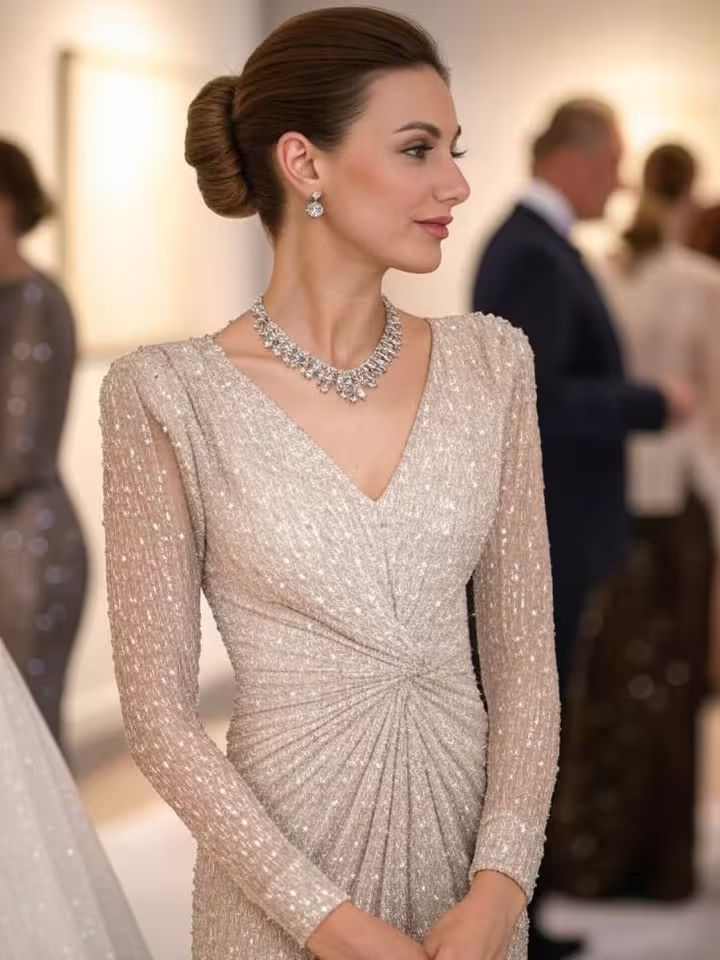
In the circles where I move - from galas in Monaco to after-parties in Dubai - I've noticed an uncomfortable truth: English makes you functional, but certain languages make you functional. memorable. And I'm not talking about collecting phrases for tourists. I'm talking about mastering the languages that function as secret passwords in the world of luxury: French, Italian and Arabic. These three languages not only communicate; they unlock entire worlds of protocol, connections and experiences that remain invisible to those who only speak the lingua franca of business.
French: Much More Than the Language of Love
Let me demystify something: the frenchman is not romantic by accident. It is romantic because for centuries it was the language of European courts, international diplomacy and high culture. When Coco Chanel said «Fashion passes, style remains».», The language was designed for permanence.
I witnessed this first-hand during a private dinner at a Michelin three-star restaurant in Lyon. The sommelier was presenting a 1990 Romanée-Conti, and while other diners nodded politely, I was able to chat about terroir, tannic structure and underbrush notes. I was not translating: I was inhabiting the language. The difference was noticeable when, at the end of the evening, we were invited to a private tasting in their personal cellar. Those doors don't open with Google Translate.
«French is the only language where you can insult someone and sound elegant doing it.» - Jean Cocteau

The Hidden Protocol of French in High Level Dating
In the world of exclusive dating, French operates on multiple levels. First there is the obvious level: it sounds sophisticated, it evokes Paris, lavender fields in Provence, chateaux of the Loire. But there is a second level that few pick up on: french teaches you the art of elegant involvement.
While in English or Spanish we tend towards directivity, French cultivates refined ambiguity. A «peut-être» (perhaps) can mean ten different things depending on the intonation. This subtlety, this ability to suggest without declaring, is precisely what turns an ordinary conversation into high-level flirtation. I've seen how a well-placed phrase at a vernissage in Le Marais can transform a formal introduction into an invitation to dinner in an apartment overlooking the Seine.
And then there is the practical aspect that no one mentions: Paris continues to be the undisputed epicenter of European luxury. Hermès, Chanel, Louis Vuitton, Dior... they all speak French in their executive meetings. If you aspire to move in these circles - whether professionally or socially - French is not optional. It's your calling card.
Where French Makes You an Insider
- At Christie's Paris art auctions: where the most exclusive pieces move among collectors who negotiate in French behind the scenes.
- In the private salons of haute couture houses: where VIP clients receive personalized attention in a French language you will never hear on the street.
- At diplomatic dinners and philanthropic events: where French is still the working language, especially in international organizations based in Geneva or Brussels.
- At boutique hotels on the French Riviera: where truly personalized service is only activated when you show that you are more than just a tourist.
Honestly, I recognize that French can be frustrating at first. Its grammatical rules seem designed to humiliate foreigners, and natives can be unforgiving about pronunciation. But it is precisely that difficulty that keeps it as a social filter. Not everyone can master it, and that exclusivity is its greatest value.
Italian: The Dolce Vita Turned into a Language
If French is intellectual refinement, Italian is intellectual refinement. joie de vivre materialized in syllables. But beware: reducing it to «the language of pasta and pizza» is like thinking that Ferrari only makes fast cars. Italian is the language of the bel design, The craftsmanship elevated to art, and a lifestyle that turns luxury into everyday life.
Giorgio Armani, who redefined masculine elegance in the 1980s, expressed it perfectly: «Elegance is not in putting on a new dress, but in the way you wear it.» And that philosophy is embedded in the Italian language. When you speak Italian, you don't just communicate information; you convey attitude, gestures, a way of being in the world that values both beauty and functionality.
Let me tell you what I discovered in Milan during Fashion Week. While many international guests were limited to photographing runway shows and attending cocktail parties, I was able to have real conversations with emerging designers, Vogue Italia editors and buyers from the big boutiques. Not because my Italian was perfect - it is far from perfect - but because the mere attempt generated an immediate connection.
Italian in the Art of Mediterranean Seduction
In the context of exclusive dating, the Italian has a unique superpower: makes the emotional intensity natural, not dramatic. While passionate statements in other languages may sound excessive, in Italian they are... normal. It is a language that allows strong emotions to be expressed without crossing the line into the melodramatic.
I remember a date in Venice - because yes, dates in Venice are as cinematic as you imagine - where after dinner at the Alle Testiere restaurant, we walked through empty alleys. Instead of the English clichés, a simple «Questa serata è magica» (Tonight is magic) pronounced with the right cadence completely transformed the atmosphere.. I wasn't trying to impress; I was sharing a moment in the language that best captured it.

And then there is the practical aspect that superficial travelers ignore: Italian gives you access to a network of family connections that function as the real social currency in Italy.. Italians value loyalty, shared history, personal introductions. Speaking their language signals that you respect those values, that you are not just another tourist coming to consume their culture.
Scenarios Where Italian Makes a Difference
- In the fashion houses of Milan and Rome: where private showrooms and pre-launch collections are only shown to those who demonstrate real cultural interest.
- In family vineyards in Tuscany and Piedmont: where the best vintages never make it to the international market, only to amici who understand the trade
- On yachts moored in Portofino or Capri: where invitations to private parties are extended to those who can have a real conversation, not just exchange names.
- In art galleries in Florence: where serious collectors trade in Italian, leaving tourists to buy the overpriced pieces.
An anecdote that perfectly illustrates this point: during a visit to a leather workshop in Florence - the kind that doesn't have a website or a sign on the door - my basic knowledge of Italian allowed me to understand that the artisan was also an amateur sommelier. That conversation led to an invitation to his private winery and, eventually, to a presentation with a producer of Brunello di Montalcino I would never have known otherwise. Those organic connections only happen when you speak the language of the heart, not just commerce.
The Arab: The Uncharted Frontier of Contemporary Luxury
This is where most people in the Western world stop. And precisely because of this, the Arabian represents the largest untapped opportunity in the global luxury landscape. While everyone studies Mandarin with China in mind, few pay attention to the fact that the Persian Gulf countries concentrate some of the largest individual fortunes on the planet.
Let's make one thing clear from the outset: when I speak of Arabic, I am referring mainly to two variants. Modern Standard Arabic (fusha), which is the formal language of the media, literature and official discourse. Y Gulf dialects, The Emirati and Saudi languages, especially, are the ones that really open doors in the circles of economic power. Egyptian also has its place as the most widely understood dialect in the Arab world, thanks to its film industry.
According to a report by McKinsey on the luxury market in the Middle East, The region accounts for approximately 10% of global personal luxury spending, with projected growth far outpacing that of Europe or the United States. And yet, most Western players continue to treat these markets in English, missing critical cultural nuances.
Arab Hospitality as an Access Protocol
What no one tells you about the Arab world is that hospitality is not politeness; it is codified social protocol.. When you master even basic phrases in Arabic, you activate a system of cultural reciprocity that transcends normal business transactions.
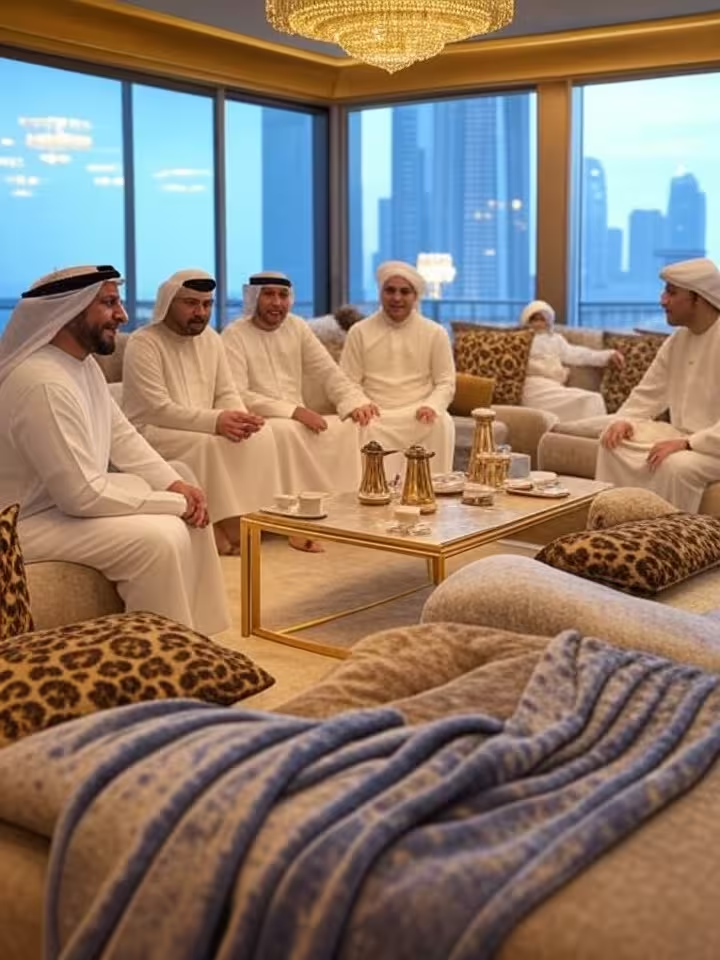
I experienced it firsthand in Dubai, during a dinner at the Burj Al Arab. While other international guests interacted in English with cool politeness, I used a few phrases in Gulf Arabic: appropriate greetings, compliments on the architecture and hospitality, references to classic poetry. The difference was remarkable. What for others was just another business dinner, for me became an invitation to a private majlis (traditional meeting) the next day, where opportunities that would never make it through official channels were discussed.
«He who learns a new language acquires a new soul.» - Arabic proverb
In the context of dating in the Arab world - and especially among Arab expatriates in cities such as London, Paris or New York, language functions as a verifier of serious intentions. People in these circles are accustomed to Westerners being attracted by stereotypes or simply by money. Demonstrating knowledge of the language and culture signals genuine respect, not superficial opportunism.
Where Arabic Distinguishes You from the Rest
- In auctions of contemporary Arab art: a booming market that mixes tradition and avant-garde, from modern calligraphy to conceptual installations.
- In prestigious equestrian events: Arabian horse racing and falconry competitions where the Gulf's elite are concentrated.
- In ultra-luxury real estate investments: where the best projects in Dubai, Abu Dhabi or Riyadh are negotiated in Arabic months before reaching the international market.
- At exclusive resorts in Oman and Saudi Arabia: emerging destinations that are redefining ultra-luxury tourism with a unique cultural sensibility
I openly admit that Arabic is the most challenging of these three languages. Its alphabet forces you to relearn how to read. Its Semitic grammar works with completely different logics than the Indo-European languages. And the dialectal variations can be bewildering at first. But it is precisely this complexity that makes it valuable. It's not a language you can master with an app in three months. It requires genuine commitment, and that's exactly what makes it so appreciated when you demonstrate it.
Beyond Words: Languages as Systems of Thought
There is a dimension that is rarely discussed in luxury circles: each language not only allows you to communicate, but also reorganizes the way you perceive the world.. This is not cheap philosophy; it is backed by decades of research in cognitive linguistics.
French teaches you analytical precision and logical structure. Its demanding syntax forces you to organize thoughts before articulating them. That mental discipline carries over to how you navigate complex conversations in high-level professional or social settings.
Italian connects you with an emotional expressiveness that Germanic languages tend to repress. It allows you to access a wider palette of affective nuances without sounding melodramatic. In contexts of exclusive dating, that emotional authenticity is the real luxury.
Arabic introduces you to a worldview where language and spirituality are intrinsically connected. Every sentence carries echoes of poetry and ancient proverbs. That cultural depth gives you a completely different perspective on concepts such as generosity, honor and loyalty. -values that remain fundamental in the circles of power in the Arab world.
The Learning Strategy No One Tells You About
After years of moving in these circles and studying these three languages - with varying degrees of success, I admit - I have developed an approach that contradicts conventional wisdom:
Forget about perfect fluidity. Look for strategic competence.
You don't need to speak like a native Parisian, a Renaissance Florentine or an Emirati sheikh. What you need is:
- Mastering conversational etiquette: appropriate greetings, politeness formulas, expressions of appreciation that demonstrate cultural awareness
- Develop specialized vocabulary in your area: fashion, art, gastronomy, investments... whatever is relevant to your specific circles.
- Cultivate a respectable pronunciation: not perfect, but good enough so that native speakers do not automatically switch to English
- Understand key cultural references: literature, history, relevant figures that inform educated conversation in every language
I have seen people with basic knowledge but culturally informed outperform more technically proficient speakers but without cultural context. In luxury circles, form matters as much as content. A grammatical error is forgiven if you show genuine respect for culture. Technical perfection without cultural sensitivity, on the other hand, marks you as a perpetual outsider.
Unconventional Resources That Work
Forget generic language apps. Here's what really produces results:
- For French: Immerse yourself in cultural podcasts like «France Culture» and read glossy magazines like L'Officiel in their original version. Specialized content teaches you the register you will actually use.
- For Italian: Classic Italian films (Fellini, Visconti, Antonioni) give you both the language and the cultural codes. And contemporary series like «Made in Italy» show you the fashion world from the inside.
- For Arabic: Start with the dialect you need (probably Gulf if you focus on luxury). Platforms like Bayaan or Playaling offer region-specific content, far superior to generic courses.
And perhaps most importantly: hire tutors who are cultural insiders, not just language teachers. Look for someone who has worked in fashion houses, art galleries or luxury companies. They will teach you not only the language, but the implicit codes that really matter.
The Mistake Almost Everyone Makes
Here is the uncomfortable truth that I have observed over and over again: most people treat languages as collections of data to be memorized, not as living systems of social relation. They study grammar for years but cannot hold a ten-minute conversation at a cocktail party.
The right approach is the reverse. Start interacting - however awkwardly - from the first month. Accept the awkward dinners, the misunderstandings, the embarrassing moments when you mix up a word. These errors are the price of entry to real competition.
And this is crucial: don't study these languages in isolation. Immerse yourself in the worlds they represent.. If you study French, travel to Paris not as a tourist but in search of real cultural events. If you study Italian, spend time in Milan during Fashion Week or Venice during the Biennale. If you study Arabic, schedule strategic trips to Dubai, Abu Dhabi or Beirut, and look for authentic cultural experiences, not the usual tourist circuits.
As Nelson Mandela said: «If you speak to a man in a language he understands, it goes to his head. If you speak to him in his own language, it goes to his heart.» And in luxury circles, the connections that reach the heart are the ones that really count.
The Most Profitable Investment You Will Ever Make
Let's be brutally honest about the numbers. An intensive French, Italian or Arabic course can cost you between 2,000 and 5,000 euros. Private lessons with specialized tutors, maybe 100-150 euros per hour. Cultural immersion with strategic travel, another several thousand.
Now compare that to the value of the connections you unlock. A single introduction into the right circle-that invitation to a private dinner, that access to an exclusive auction, that business opportunity that is never publicly announced-can multiply your investment by a hundredfold or a thousandfold.
But beyond the direct economic return, these languages give you something even more valuable: cultural credibility.. In a world where everyone can buy luxury products, but few really understand the cultures that produce them, that linguistic and cultural knowledge puts you in a different category.
You are no longer the rich foreigner. You're the cosmopolitan insider who understands that true luxury is not what you buy, but how you relate to the world. And that social distinction is literally priceless.
Where to Start Today
If you've made it this far, you're probably already convinced. The question is: which of these three languages should you prioritize?
My response: depends on where you want to be in two years.
If your goal is to move in the most established circles of European luxury -Parisian fashion, contemporary art, cultural diplomacy-, French is your best bet. It is the language with the longest history in these worlds and remains the lingua franca in many exclusive contexts.
If you're more attracted to Mediterranean style, craftsmanship elevated to art and a warmer, more relational approach to luxury, Italian will open doors you didn't even know existed. It's especially valuable if you're interested in fashion, design or high-end gastronomy.
If you want to be where the money is really moving right now, where the most ambitious luxury projects are being developed and where individual fortunes are stratospheric, Arab is the untapped frontier. It requires more effort, yes, but the potential return is proportionately greater.
Or you can do what I did: develop functional competence in all three in a staggered manner. Start with the one that best aligns with your immediate goals, reach an intermediate level, and then add the next one. In five years, you can have practical proficiency in all three. And at that point, your social capital in global luxury circles will be exponentially greater than when you started.
Because at the end of the day, these languages are not just communication tools. They're master keys to worlds most people don't even know exist. And once you walk through those doors, your perspective on luxury, relationships and opportunities is forever changed.
The question is not whether you should learn these languages. It's when are you going to start.

 English
  Spanish
  French
  Portuguese
  Italian
  German