
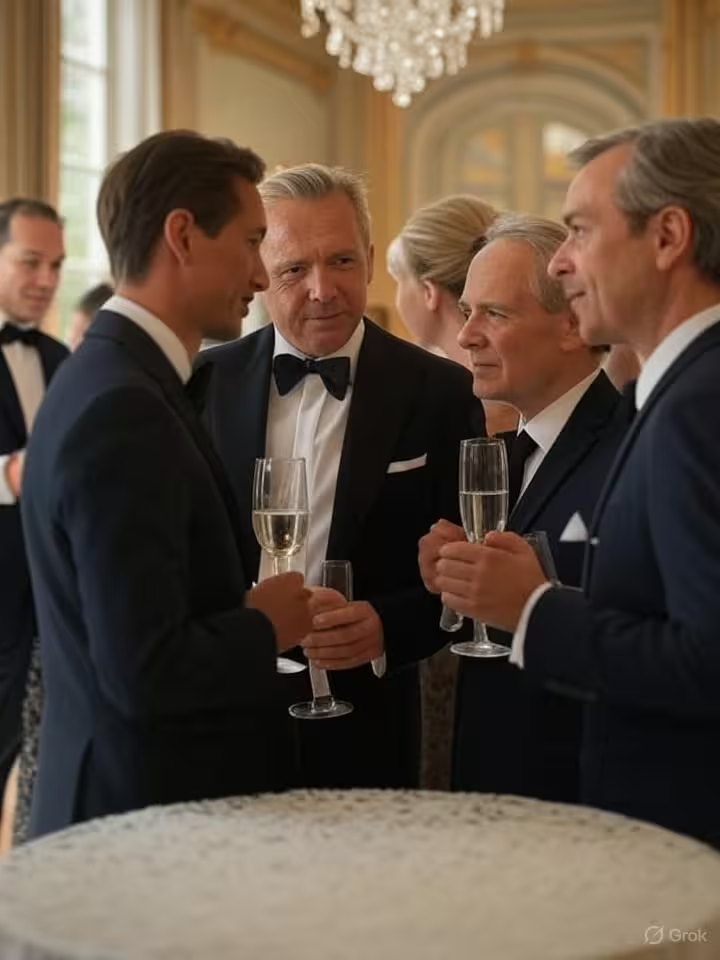
If you've ever set foot in the halls where champagne flows like water and conversations are woven with threads of influence, you'll know that true luxury is not in diamonds or yachts, but in know how to navigate these waters with grace. I, who have spent years rubbing elbows with heirs, tycoons and those ethereal figures that seem straight out of a Fitzgerald novel, can tell you firsthand: the unwritten rules of good society are like an invisible code that separates those who belong from those who only watch from the outside.
It's not about Victorian rigidity or archaic protocols that smell of mothballs. It is that subtlety that makes everything flow without apparent effort, that instinctive mastery of social situations that turns a simple evening into a memorable experience. And you, if you aspire to enter these circles where decisions are made between glasses of Château Margaux, you need to master them. Because here, a faux pas is not forgotten with a quick apology: it is remembered forever.
The Art of Silence and Intelligent Conversation
Imagine that you are at a private dinner in a château in the French countryside, surrounded by people who might buy your company before dessert. The first thing no one tells you is that silence is your best ally. In these environments, talking for the sake of talking is a cardinal sin, as serious as wearing brown shoes with a tuxedo.
I've seen promising entrepreneurs ruin their evening by spouting monologues about their startups, without realizing that the host only wanted a pause to savor the Romanée-Conti he had just uncorked. You, on the other hand, listens with genuine interest. Ask questions that reveal genuine curiosity, not interrogations worthy of a prosecutor.
«Conversation is an art in which everyone is a master and no one is an apprentice.» - Oscar Wilde
«How has your vision of contemporary art evolved since you acquired that Basquiat piece?» That question opens doors. But watch out: do not feign knowledge. Authenticity is the currency here, more valuable than any Bitcoin. Once, at an evening on New York's Upper East Side, I witnessed a guy make up an anecdote about a trip to the vineyards of Burgundy and was unmasked by the house sommelier, who happened to have been born in Meursault. The silence that followed was colder than Arctic ice.
What distinguishes the true connoisseurs is their ability to providing value without exhibitionism. When you share an experience, do it humbly but in detail. Don't just say «I was in Japan»; tell how the tea ceremony in Kyoto made you rethink your concept of time. That narrative texture, those sensory details, transform an ordinary conversation into something memorable.

Dating in Exclusive Circles: Where Romance Meets Protocol
Now, let's move on to the field of dating in high-level environments, which in these circles is an art in itself. Do not expect swipes in conventional applications; here, connections are forged at charity galas, weekends in Aspen or intimate dinners at private clubs where the waiting list exceeds ten years.
What no one tells you is that discretion is not optional, it is obligatory. If you're courting someone highborn, forget the social media photos the second you meet. Remember that time when a European heir got caught up in a media scandal for a selfie reckless with his new partner in Saint-Tropez. The tabloids devoured him like hyenas, and it took years for his reputation to recover, if it did at all.
Gestures That Count More Than Words
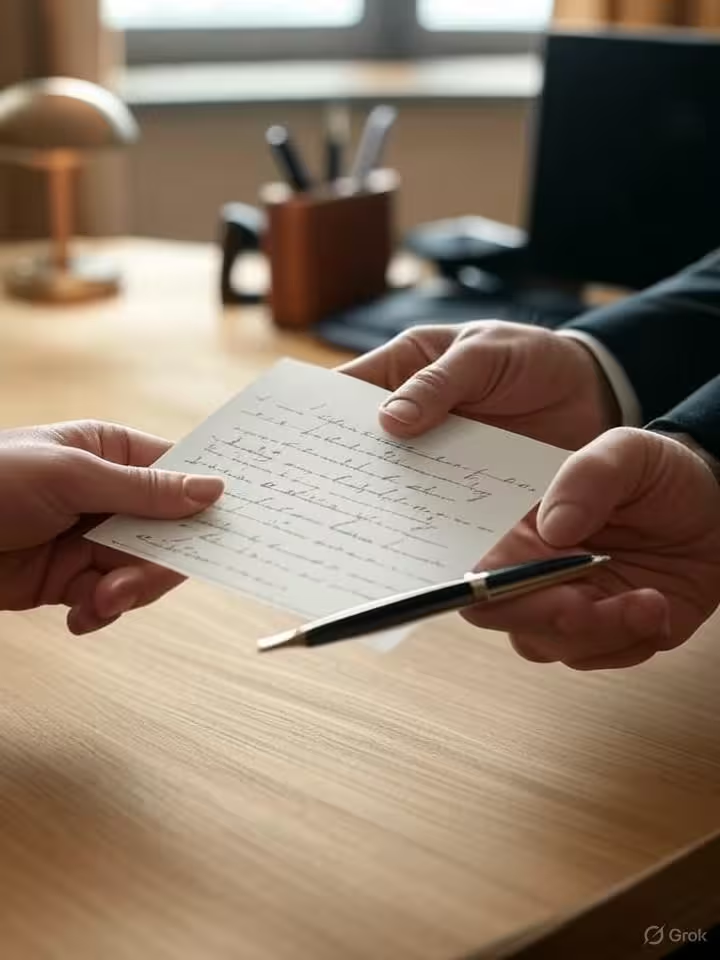
You, be subtle as a whisper in a library. Send a handwritten note after the date, not a text with emojis. And as for gifts, choose something personal and thoughtful: a rare book she mentioned in conversation, a signed first edition, or tickets to that opera at La Scala she mentioned in passing. Never ostentatious jewelry in the first stage that screams «look what I can afford».
It's honest to admit that not everything is fairytale romance. Sometimes these pairings carry a veil of calculated convenience, where familial alliances outweigh instant chemistry. I've seen couples who shine at public events but share little in the intimacy of the home. And that's a nuance that adds complexity to apparent elegance, a reality that no one mentions in society magazines.
As he once said Wallis Simpson, The woman for whom a king abdicated: «You can never be too rich or too thin.» While the phrase may sound shallow to the modern ear, it captures that constant pressure to maintain certain standards that defines these spheres. What really matters, however, is not the numbers in your bank account, but your ability to move naturally in any social context.
Costumes as a Silent Language
Talking about elegance, the wardrobe in good society is a proper language, The new collection is full of nuances that go beyond the designer labels. It's not about wearing the latest model of haute couture directly from the catwalk, but to look as if you were born wearing it, as if that Brioni suit or that Valentino dress were natural extensions of your skin.
Imagine arriving at a brunch in the Hamptons wearing an impeccable but wrinkled suit: instantly, you're labeled as a nouveau riche, as someone who has the money but not the refinement. What I've learned in my wanderings in Palm Beach, Marbella and Monaco is that customized tailoring is the key to success and in reading perfectly the unwritten code of each event.
Dress Codes According to Occasion
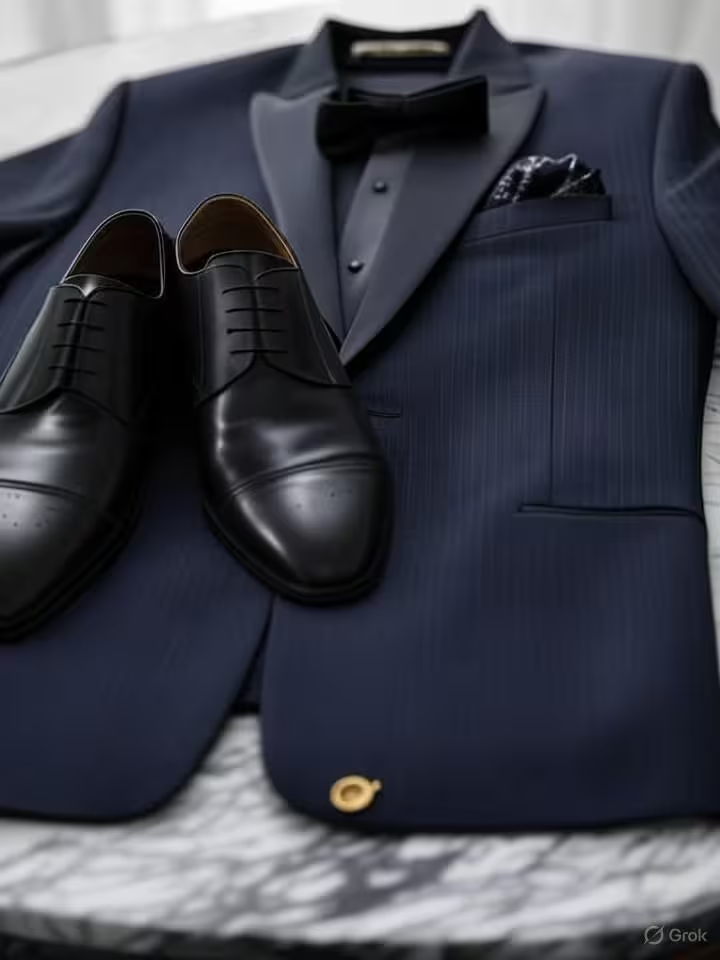
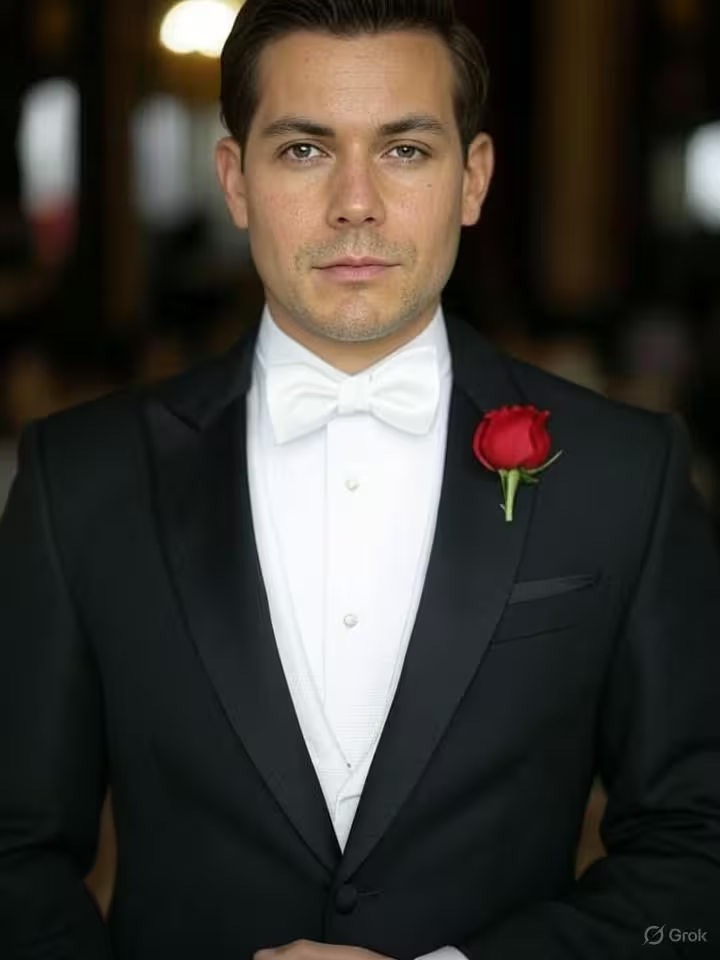
- Opera at La Scala or Covent Garden: Impeccable tuxedo with a touch of personality in the pocket square. Black is safe, but a midnight blue velvet says «I know the rules and I know when to bend them».
- Newport Regatta: Nautical blazer, white or khaki pants, loafers without socks. Anything more formal marks you as alien to the environment.
- Cocktail party in an Upper East Side apartment: Dark suit, shirt without tie if it is summer, with tie if it is winter. Shoes should shine like mirrors.
- Weekend at an English country estate: Tweeds, Dubarry's country boots, and that air of country gentleman that is not bought, it is grown.
But beware of overdoing it. I once witnessed a guest show up at a private dinner party with a Patek Philippe watch so overloaded that it eclipsed the evening sun. For the rest of the evening he was treated with polite distance, like a wealthy tourist who had lost his way. You, opts for calculated moderation. An elegant but discreet watch, cufflinks with family history, an heirloom signet ring: these details speak louder than any ostentation.
And in the context of exclusive dating, it coordinates without seeming intentional: if she wears Mikimoto pearls, a discreet lapel pin complements without stealing the limelight. The aesthetic harmony is seductive; the imbalance, awkward.
The Art of Conversational Transitions
Transitions between topics in high-level conversation are another subtle art that separates the insiders from the upstarts. In these circles, jumping abruptly from international politics to personal gossip is like spilling red wine on a 19th century Persian Tabriz carpet: unforgivable.
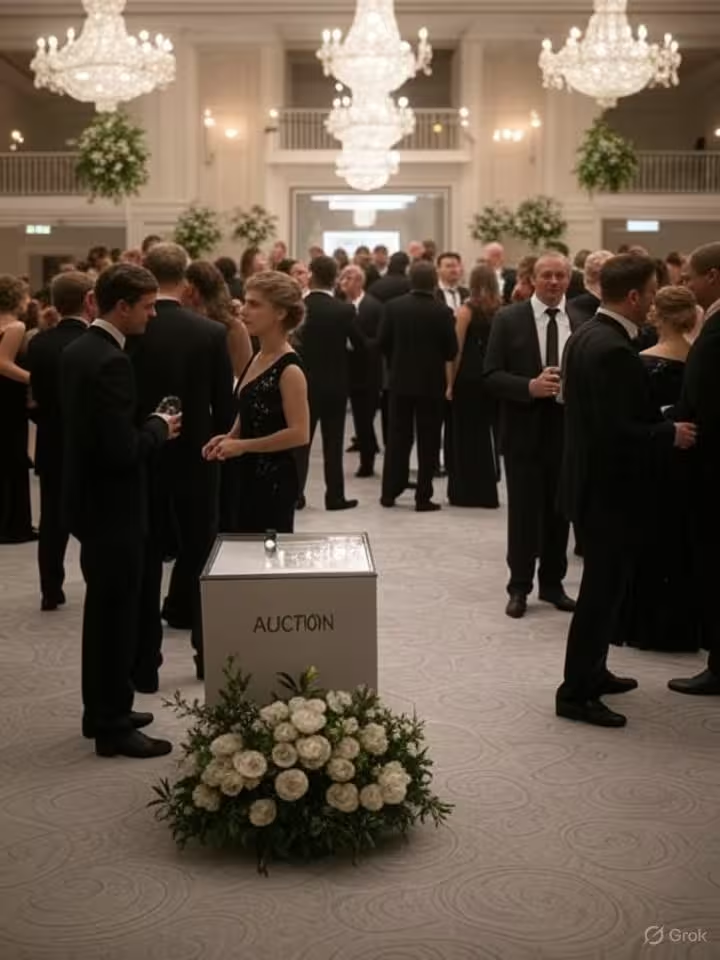
I've been on talk shows where someone mentions a recent scandal-say, the fall of a financial tycoon-and the group pivots with almost choreographed grace to something neutral, like the latest trip to the Côte d'Azur or Christie's auction. You, practice that art of the elegant pivot. If the topic gets too heated, interject with something like, «Fascinating perspective. Moving on, how was that Capri getaway you mentioned last week?»
«Good manners are the art of making people comfortable; he who makes the most people comfortable has the best manners.» - Ralph Waldo Emerson
It's a way to keep the social flow going without offending sensibilities or creating unnecessary tension. Now, let's acknowledge an honest nuance that no one mentions in etiquette guides: not everyone in good society is a saint. There is institutionalized hypocrisy, such as those figures who preach philanthropy at charity galas while structuring tax havens in the Cayman Islands. But to criticize openly is absolute taboo.
What no one tells you is that see and learning from those contradictions makes you more astute, not cynical. It's part of your sentimental education in these environments. As he wrote Honoré de Balzac in «Papa Goriot»: «The secret of great fortunes without apparent cause is a forgotten crime, because it was done with property». That phrase, written in 1835, is still current in certain circles where memory is selective and forgiveness, inversely proportional to power.
The Protocol of Invitations: Implicit Commitments
Regarding invitations, accepting them is an implicit commitment that goes beyond marking «I will attend» on an engraved card. Turning one down without an impeccable-and above all, credible-excuse can close doors forever, as if you've insulted the host's grandmother.
Imagine declining an evening on a yacht in Monaco during the Grand Prix because «you have plans». That's social suicide. Better say you're on a unavoidable family commitmentA wedding, a significant anniversary, or even a delicate health issue (without going into the gory details). I myself have navigated those treacherous waters, and I assure you that a gracefully excused absence is remembered with empathy, not resentment.
Golden Rules for Invitation Management

- Respond immediately: Punctuality in response denotes respect and organization.
- If you decline, offer an alternative: «Unfortunately I won't be able to attend that evening, but I would love to invite you to dinner next week.»
- Never cancel at the last minute: Except for hospital emergencies, there is no valid excuse.
- Be on time (but not too early): 5-15 minutes after the appointed time is ideal for social events.
- Send a thank you note: Manuscript, the next day, without fail.
But be careful: do not abuse excuses. Consistency builds trust like compound interests build fortunes. In exclusive dating, this is amplified exponentially. Canceling a last-minute date without a solid reason is like burning a gold bridge: the metal melts quickly and rebuilding is nearly impossible. I've seen promising romances vanish over something as seemingly trivial as prioritizing a business meeting over an intimate dinner that had been weeks in the planning.

Networking Disguised as Friendship: The Long Game
Another aspect that I love and loathe in equal parts is the networking disguised as genuine friendship. In the good partnership, relationships are cultivated like fine Burgundy vineyards: with infinite patience, meticulous attention and no obvious pressures to ruin the process.
You, never ask for favors in the first conversation. Let opportunities arise organically, as conversations flow into natural collaborations. I remember a night at Annabel's in London where a banker approached an oil tycoon with a direct investment proposal, card in hand and pitch memorized. The tycoon smiled with that freezing British politeness, but the banker never received another invitation.
On the other hand, share anecdotes that reveal your value without showing off. Talk about that project where you transformed a struggling company, but do it in response to a question, not as an unsolicited monologue. Casually mention your collaboration with a charity, but focus on the impact, not your paycheck.
«True elegance consists in not attracting attention.» - Giorgio Armani
And in cultural terms, think about how Marcel Proust described the social intrigues in «In Search of Lost Time».»is an eternal dance of masks, where the unsaid weighs infinitely more than the words spoken. This literary masterpiece perfectly captures these circles, where a glance can seal a multi-million dollar deal or break an alliance that has been generations in the making.
The salons of the Duchesse de Guermantes that Proust immortalized are not so different from the penthouses of Billionaires’ Row in Manhattan or the villas of Cap Ferrat. The decorations and technology are different, but the essence of the social game remains intactsharp observation, strategic patience, and that almost supernatural ability to read between the lines.

Calculated Vulnerability: Humanizing Perfection
However, not everything is perpetual glamour and French champagne. There are moments of authentic vulnerability that humanize even the most elevated, those instants where the mask loosens slightly and the real person behind the social persona appears.
What no one tells you is that behind the perfect smiles there are deep insecurities. That fourth-generation heiress who quietly confesses, after the third glass of wine, her paralyzing fear of not living up to the family legacy. That businessman who built an empire but secretly fears that his children will squander it. That high society divorcee who wonders if anyone would love her without her family name and fortune.
Recognizing these nuances makes you relatable, not weak. You, if you share something personal at the right time - not during the aperitif, but perhaps during the digestive, when the defenses naturally go down - you strengthen bonds exponentially. In the context of exclusive dating, this is pure goldmeasured, well-timed honesty can transform a superficial connection into something deep and lasting.

But keep a delicate balance: emotional overexposure is as fatal as total impenetrable reserve. I've seen someone ruin their social standing by venting about their traumatic divorce at a gala dinner. The awkward silence that followed was deafening. On the other hand, those who never reveal anything end up being perceived as cold, calculating, impossible to really know.
As he masterfully expressed Coco ChanelFashion passes, style remains«. And I would add: appearances make an impression, but calculated authenticity conquers. That is the central paradox of these circles: you must be genuine, but strategically genuine. Vulnerable, but selectively vulnerable. Open, but with invisible but firm boundaries.
The Spaces Where the Elite Are Forged
These codes are not learned in books or weekend seminars. They are absorbed in specific locations where the elite congregatesThe bar at Claridge's in London at six o'clock in the evening, the terraces of the Hotel du Cap-Eden-Roc in Antibes during the Cannes Film Festival, the private boxes at Wimbledon, or those intimate dinners in private homes in Belgravia where a photographer will never appear.

I've learned more about social etiquette in an afternoon at Disneyland's Club 33 (yes, that secret club that almost no one knows about) than I have in years of reading etiquette manuals. Because it is in the direct observation where you pick up on those nuances that are impossible to encode: how someone subtly turns down a business proposition without saying «no,» how one navigates a conversation about sensitive topics without offending anyone, how one withdraws from an evening without seeming rude.
If you are trying to navigating the complex world of high-level relationships, You need to immerse yourself in these spaces, observe with anthropological attention, and above all, learn from your mistakes without repeating them. Because in these circles, the second chance is a luxury that is rarely granted.
The Cultural Factor: Global Protocol Variations
It is crucial to understand that these rules are not universal; they have significant cultural variations that a true connoisseur must master. What works impeccably on Park Avenue can be disastrous in Mayfair, and what is appropriate on the Parisian Rive Gauche might be strange in Ginza.

In the United States, for example, there is a certain amount of admiration for the self-made man, that entrepreneur who built his fortune from scratch. Mentioning your humble origins and your upward trajectory can be seen positively, as a demonstration of character and determination. But try that same approach in certain European salons of old aristocracy, and they will look at you as an upstart who doesn't understand that what counts here are centuries of lineage, not millions of dollars.
In Japan, the protocol is even more complex: the exchange of business cards (meishi) has its own ceremony, silence is valued more than flowery conversation, and hierarchy must be respected with mathematical precision. An extroverted American who pats the back of a Japanese CEO has just committed social harakiri.
Therefore, if you aspire to move in elite international circles, you need to develop that cultural intelligence that goes beyond knowing which fork to use. It's understanding when to bow, when to offer a hand, when a kiss on each cheek is appropriate, and when to maintain that physical distance that in certain cultures is sacred.

Technology and the New Digital Protocol
We live in an era where social protocol must adapt to the digital reality without losing its essence. The basic rules still apply, but now they also apply to WhatsApp, emails and - with extreme caution - social networks.
In these circles, for example, replying to a message immediately may denote desperation or lack of important business. But letting days go by without a response is rude. The sweet spot is to respond within 2-24 hours, depending on the context and relationship. A thank you requires a quick response; a casual invitation allows more time for reflection.
And about social networks: many in the true elite. are simply not present. They have no public Instagram, their Facebook is non-existent, and their LinkedIn is managed by an assistant. Why? Because their network is already established and they don't need digital validation. If you are building your way into these circles, keep your profiles discreet and professional, never frivolous or exhibitionist.

A golden rule: never tag someone high society in photos without their explicit prior permission. I've seen decades-long friendships end because of an unauthorized photo that appeared in the feed someone's Instagram account. Privacy is the last true luxury, and violating it is unforgivable.
Final Reflection: The Purpose Behind the Protocol
At the end of the day, mastering these unwritten rules is like learn a fluent language that opens worlds to you previously inaccessible. I have seen outsiders genuine become insiders respected only by paying obsessive attention and adapting their internal compass without losing their essential authenticity.
You can do it, with deliberate practice, keen observation and a touch of that intuition that is not taught, only developed. Remember: the good society is not an exclusive club by arbitrary whim, but for the harmony that these subtleties create. It is like a symphony orchestra where each musician knows his part perfectly and the result is that sublime music that transcends the individual notes.
And if you ever find yourself lost in one of those eternal nights-when conversations flow in three languages, cultural references fly like butterflies you can't catch, and you feel like you're a step behind the beat-just take a deep breath and carefully observes. The code is revealed only to those who look with true attention, not with anxiety to impress.
Because in the end, as he said Diana Vreeland, the legendary Vogue editor who defined the elegance of an era: «Elegance is rejection. Rejection of the vulgar, of the obvious, of the desperate. It is the ability to move with grace among the most powerful without ever losing sight of who you really are, beyond the gilded halls and crystal goblets.
So go ahead: absorb these lessons, adapt them to your context, and remember that true luxury is not owning extraordinary things, but living with that luxury. apparent ease that makes everything - from a conversation to an entrance to a gala - seem natural, inevitable, perfectly orchestrated with no visible effort. That, dear reader, is the secret that separates those who belong to of those who simply attend.


 English
  Spanish
  French
  Portuguese
  Italian
  German