
On December 24, 1864, Johannes Badrutt wagered his entire reputation with four British guests: if they returned to St. Moritz in winter and did not enjoy the Alpine sunshine as much as the Mediterranean summer, he would pay for their entire trip. Not only did they return, but unwittingly founded the winter tourism industry. That gamble transformed forgotten alpine valleys into the epicenters of power, money and connections that today define the global elite.
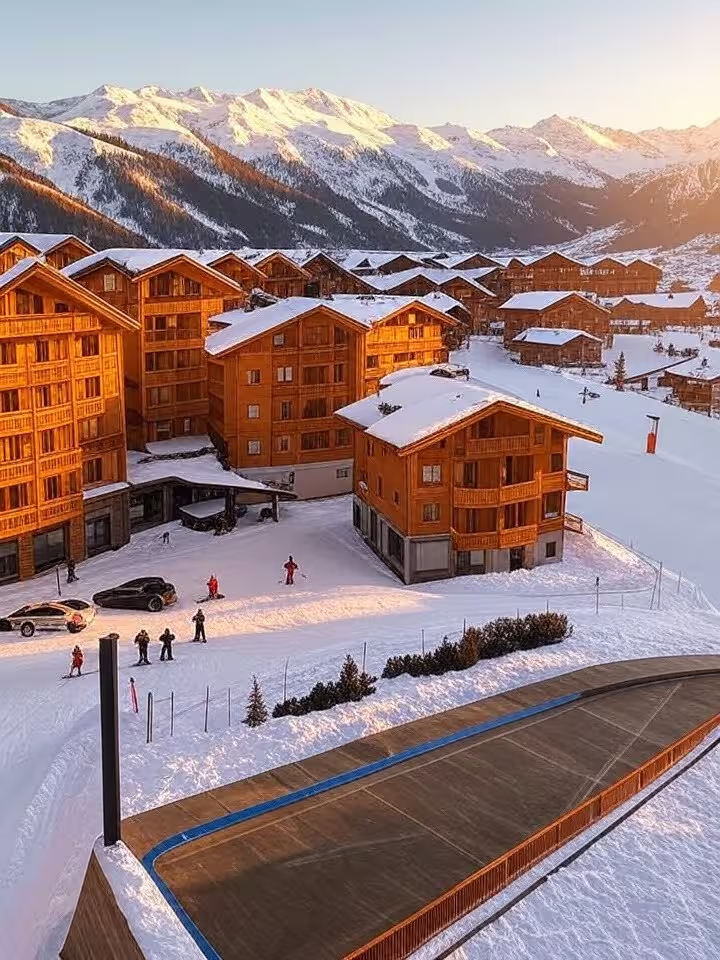
Because here is the truth that no one admits out loud: these destinations were never really about skiing. They are carefully orchestrated scenarios where business mergers are closed on chairlifts, where heiresses meet their future partners in private chalets, and where a casual comment about wine can lead to an invitation to Gstaad next season. I've spent enough winters in these snow temples to recognize the pattern: the best connections rarely happen on the tracks, but rather in the interstices between them.
St. Moritz, Aspen and Courchevel share something beyond impeccable snow: they are social laboratories where the rules of the ordinary world are temporarily suspended, allowing encounters that in any other context would be impossible. But each has its own code, its own grammar of luxury. Getting the wrong register can cost you more than a fall on a black runway.
St. Moritz: Where European Aristocracy Wrote the Manual
To walk through St. Moritz is to walk through the pages of a history book illustrated with belle époque chalets and frozen lakes shimmering like mirrors in the alpine sun. This is not a destination that reinvents itself every season.; It is a bastion that upholds its traditions with the same firmness with which the Swiss defend their neutrality. Here, innovation consists of doing things exactly as they have been done for 150 years, only with more expensive champagne.
The first thing you notice when you arrive is the social silence -that particular quality of places where ostentation is considered vulgar. Russian oligarchs learned this lesson the hard way in the 2000s, when their red Ferraris upset the aesthetic balance of the streets. The Swiss response was as polite as it was implacable: noise regulations, traffic restrictions, discreetly reproving looks. In St. Moritz, money whispers; it never shouts..
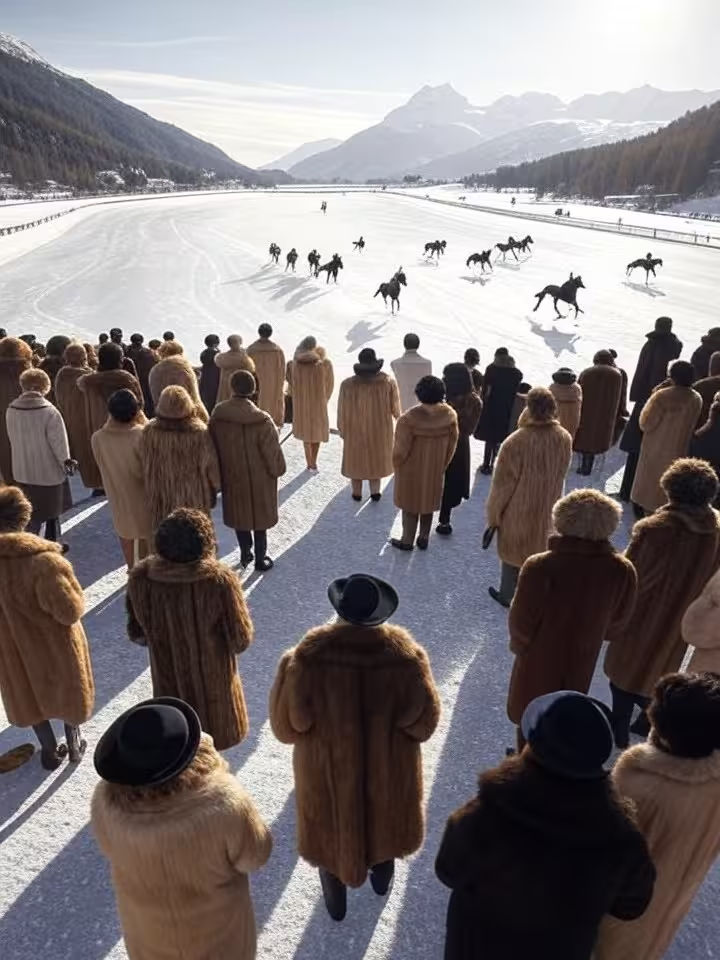
The first high-level appointments here have a particular liturgy. Forget the swanky dinners; those who really belong to this world prefer the Hanselmann for a hot chocolate at four o'clock in the afternoon, or a walk along the philosopher's path along the lake. I've seen tech moguls wooing heiresses with horse-drawn sleigh rides - the same one Coco Chanel used when she visited her lovers in the 1920s.
The slopes of St. Moritz are, paradoxically, secondary.. Corviglia offers 350 kilometers of immaculate descents, but ask any regular and they'll tell you the real attraction is the White Turf: horse races on the frozen lake that draw 30,000 spectators every February. It's a surreal spectacle where British aristocrats wager fortunes while sipping Glühwein, and where I've witnessed more marriage proposals than in any Michelin-starred restaurant.
«Luxury must be comfortable, otherwise it is not luxury,» declared Coco Chanel, a St. Moritz regular in the resort's golden years. Words that resonate in every Swiss detail: relentless efficiency disguised as hospitality.
The Secrets You Only Discover on the Third Visit
The Badrutt's Palace is the institution, of course, with its facade that looks like something out of a Brothers Grimm fairy tale. But insiders know that the real power lies in private villas like La Marsa or Chesa El Toula, spaces where old-guard European families spend generations without the need for public zip codes.
I remember a snowstorm that closed the slopes for three days. We were stuck in a chalet in Suvretta - eight strangers united by geography and Dom Pérignon champagne. By the second night, we had formed a WhatsApp group that he still uses to coordinate meetings in Capri, Dubai and the Caribbean. That is the accidental magic of St. Moritz.It forces you to intimacy, and in that intimacy, social masks are loosened.
But let's be honest about the limitations. St. Moritz can be asphyxiating in its conformity. There is an unwritten uniform (Loro Piana, Moncler, nothing too new), an implicit schedule (ski until 15:00, tea until 17:00, dinner never before 20:30), and a social hierarchy as rigid as the protocol of the court of Versailles. If your idea of vacation includes spontaneity or informality, this is not your sanctuary.
Aspen: The American Dream on Skis
If St. Moritz is a Brahms symphony, Aspen is rock and roll with a symphony orchestra. Here, new and old money mingle without the barriers that Europe so zealously maintains.. You can find a Silicon Valley CEO sharing a chairlift with a Texan oil heir, both wearing the same Arc'teryx boots and talking about the same fund manager in Greenwich.
The story of Aspen is the story of America: a bankrupt mining town resurrected by visionaries who saw more than rock and snow in its mountains. Walter Paepcke, a Chicago industrialist, transformed Aspen in the 1940s in a bold experiment: can elite culture coexist with extreme sport? The answer was a resounding yes, especially when you add private jets to Aspen-Pitkin County Airport.
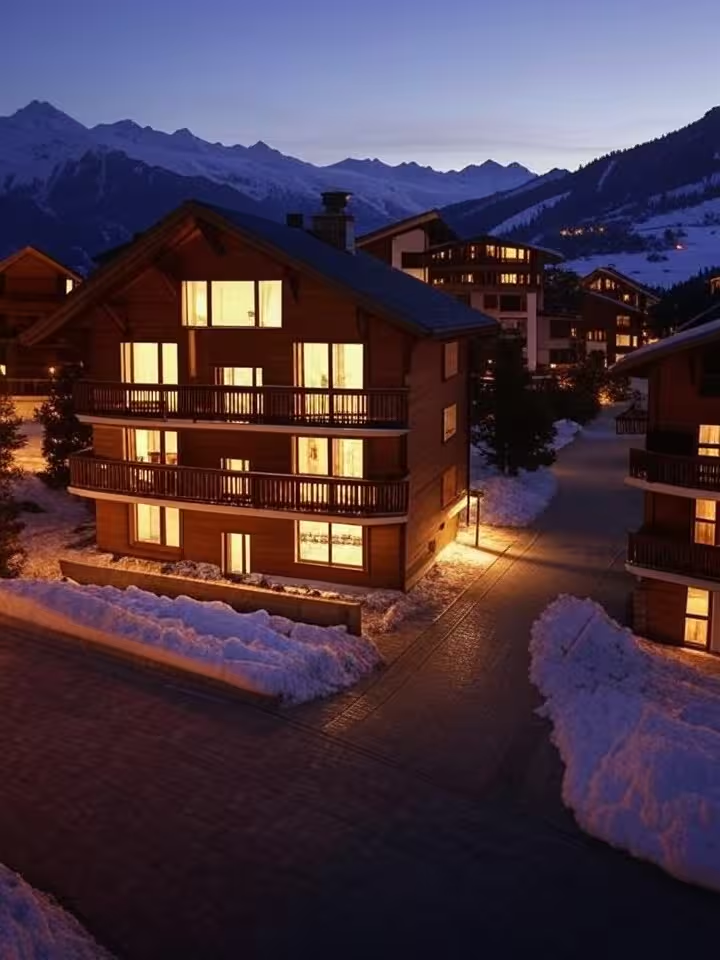
The four mountains of Aspen are distinct personalities. Snowmass is the democratic one, perfect for families and mixed groups. Buttermilk is where the pros practice for the X Games (I've seen Shaun White training there, surrounded by freaked-out teenagers). Aspen Mountain - affectionately called Ajax - is the diva, accessible only by gondola, with no green runs for beginners.
But Highlands is where the real magic happens. The Highland Bowl requires a 45-minute hike from the last chairlift, crossing a landscape that seems drawn by Tolkien. The reward is a 1,000-meter vertical descent with views that justify every step. I've done that climb with 60-year-old moguls and 25-year-old models, all equally exhausted and euphoric upon arrival. In the mountains, money buys equipment, but not endurance.
Après-Ski as a Contact Sport
The Little Nell is the base of operations for those looking to be at the epicenter. Its ski-in/ski-out location means you literally ski right to the hotel's door. But the real action happens in less obvious spaces: the Cloud Nine Alpine Bistro, at 3,000 meters above sea level, where lunches last until four o'clock and business proposals are sealed with Veuve Clicquot champagne.
For high-level appointments, Aspen offers unparalleled theater. Dinner at the Matsuhisa-the original that Nobu Matsuhisa opened before he became a global empire-is the obvious but effective move. However, those who really understand Aspen opt for the Pine Creek Cookhouse., accessible only by ski or horse-drawn sleigh. Nothing says «I went to the effort of planning this» like arriving at a dinner party after crossing a snowy forest lit by torches.
«Aspen is the place where you can wear ski boots to a dinner party and no one bats an eyelash,» commented Hunter S. Thompson, a legendary Woody Creek resident. His home, now a museum, is a must-see pilgrimage to understand the wild side Aspen never quite lost.
But let's be clear about the disadvantages: Aspen can be exhausting in its relentless social energy.. In high season (Christmas, February), the streets become catwalks where the see-and-be-seen eclipses the real skiing. Prices are stratospheric even by luxury standards-a cocktail at the J-Bar can cost the same as a full dinner in other cities. And the omnipresence of celebrities can be more distraction than attraction, especially when paparazzi are camped out on Main Street.
Courchevel: French Sophistication as Religion
Now we enter French territory, where luxury is practiced with the seriousness of a Catholic mass and the attention to detail of a Swiss watchmaker (geographical ironies aside). Courchevel is not a destination; it is a declaration of principles.. Specifically, Courchevel 1850 - the altitude in the name is not accidental, but a constant reminder that here, even the numbers have pedigree.
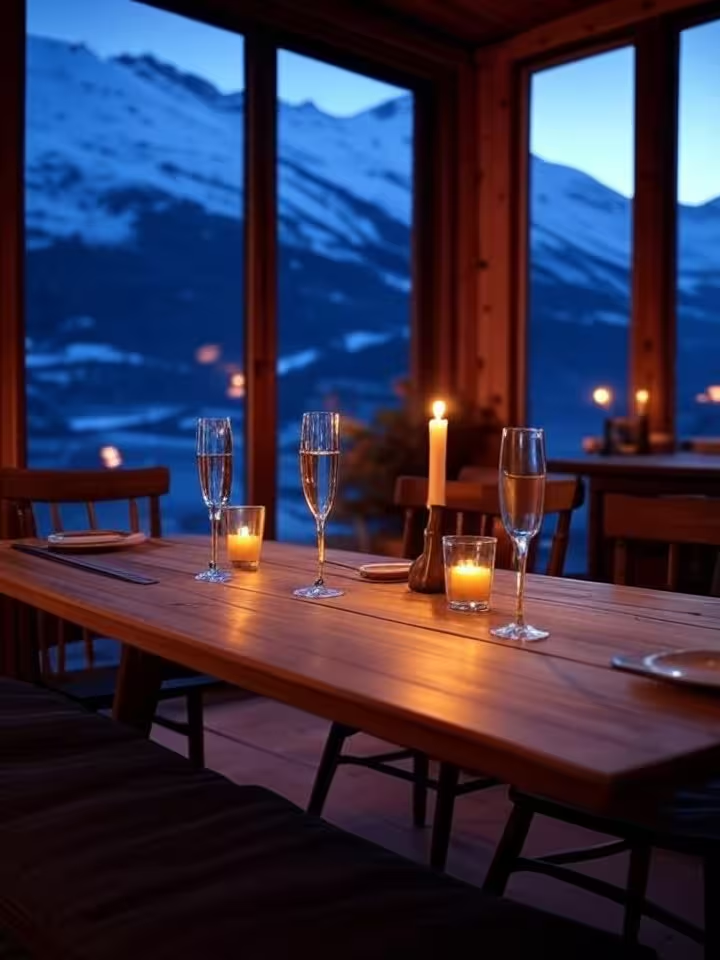
This is the resort that epitomizes the social protocol of Europe's elite. There are no architectural coincidences: each chalet respects traditional alpine aesthetics while hiding state-of-the-art technology behind weathered wood facades. The steep roofs are not folkloric; they are functional and aesthetic, designed to withstand meters of snow while maintaining proportions Vitruvius would approve of.
The Three Valleys -of which Courchevel is the jewel in the crown- make up the largest interconnected ski area in the world: 600 kilometers of linked slopes. It's a vertical labyrinth where you can ski for days without repeating descents. I've met skiers who plan their routes like generals plan military campaigns, studying topographical maps with the intensity of Napoleonic strategists.
But the real Courchevel reveals itself in details that casual tourists never notice. Courchevel has more private heliports than any resort in the world -six officers and dozens in private villas. The buzz of helicopters is the soundtrack of the place, bringing Russian oligarchs from Geneva, sheiks from Paris, Asian tycoons from... wherever they were yesterday.
Haute Cuisine as an Olympic Competition
Courchevel boasts six Michelin-starred restaurants -more than many European capitals. The Le 1947 at Cheval Blanc (three stars) is where Yannick Alléno redefines mountain cuisine with techniques that resemble culinary witchcraft. But dining there is not simply about booking and showing up; there is an unspoken code about dress (effortlessly elegant, never ostentatious), wines (let the sommelier guide, but demonstrate subtle knowledge) and conversation (multilingual, culturally informed).
For more intimate occasions, La Bouitte in neighboring Saint-Martin-de-Belleville offers three Michelin stars in a setting that the Meilleurs - the family that has run it since 1960 - have turned into a gastronomic sanctuary. This is where you take someone when you want to impress without seeming to try, when the goal is authentic connection rather than social theater.
I have been to dinner parties in Courchevel where the wine conversation became a prelude to business alliances. A Parisian banker and a London developer discovered common interests over a bottle of 2005 Romanée-Conti, and three months later they were closing a development in Monaco. In these circles, cultural knowledge is social currency. -Knowing how to distinguish a Meursault from a Puligny-Montrachet can open doors that money alone does not open.
«Perfection is attainable, but it requires relentless attention to every detail,» said Joël Robuchon, a chef who understood that luxury admits no approximations. His words resonate in every aspect of Courchevel, from the perfectly groomed snow to the preheated towels in the spas.
When Luxury Becomes a Double-Edged Weapon
But let's be brutally honest: Courchevel can be intimidating even for veterans of the luxury circuit.. The social hierarchy is invisible but omnipresent. The private chalets at Bellecôte are more exclusive than those at Jardin Alpin. The table you are assigned at L'Apogée says more about your status than your watch (and here everyone wears Patek Philippe or Richard Mille).
I have witnessed social blunders that cost future invitations: a tech entrepreneur who arrived at a gala dinner in sneakers, a Latin American heir who tried to negotiate prices at Le 1947. At Courchevel, certain rules are inviolable, and ignorance is not an acceptable excuse. It's the kind of place where you need a absolute mastery of protocol or a mentor to guide you.
Prices are stratospheric even by alpine standards. A high-end chalet in high season can cost 150,000 euros per week. Bottles of wine start where others end. And heli-skiing - an almost mandatory experience - easily adds up to 5,000 euros per day. Courchevel does not excuse budgets; Assume that if you are here, money is irrelevant.
The Anatomy of an Elite Mountain Gathering
After seasons split between these three temples of luxury skiing, I've identified patterns that repeat themselves in memorable encounters. This is no coincidence; there is an implicit choreography that the protagonists perform without a written script.
The Art of the «Casual» Encounter»
The best encounters never happen in a formal setting.. Forget organized dinners or networking events. Authentic connections emerge in moments of controlled vulnerability: trapped together on a chairlift for 20 minutes, sharing a communal table in a mountain hut when all the privates are full, or overlapping at the spa after a grueling day on the slopes.
I've seen more genuine chemistry born in these interstices than in all the organized New Year's parties combined. There's something about the mountain that disarms defenses-perhaps the post-ski endorphin, perhaps the shared awareness of human frailty in the face of nature. Whatever it is, it works.
The Signs That Separate Insiders from Tourists
Some telling indicators of who really belongs vs. who is visiting:
- Discreet vs. ostentatious equipment: Regulars wear supreme quality technical clothing but no screaming logos. Patagonia, Arc'teryx, Norrøna-brands that other skiers recognize but don't shout «look at me.».
- Contrarian schedules: They avoid tracks at 11:00 am (tourist rush hour). Prefer to leave at 8:30 am or after 2:00 pm, when the crowds thin.
- Topographical knowledge: They speak of runways by local name, not by official designations. In St. Moritz it is «the Corviglia», never «runway 12».
- Staff relations: They call by name the gondolier, the chef at the favorite retreat, the private instructor. These relationships are cultivated over the years.
- Strategic use of helicopters: Not as a whim but as a tool. To reach virgin valleys or avoid land traffic on stormy days.
Discrete Verification in Snow Environments
The question many are afraid to ask but everyone thinks: how do you verify that someone is who they say they are without ruining the charm? In environments of elite dating, This dance is particularly delicate.
Indirect signals are more revealing than direct questions. Look at how they interact with the staff: does he treat the boot cleaner well? Look at cultural knowledge: does he mention references that only someone genuinely cosmopolitan would know? Note the quality of connections: do other obviously established guests greet them with familiarity?
And when in doubt, there are discrete methods that do not compromise the elegance of the moment. A casual LinkedIn search during a coffee break. An innocent question about your company that someone genuine will answer matter-of-factly. Or simply trust instinct-in these environments, imposters rarely survive more than 48 hours before making revealing mistakes.
Beyond the Slopes: Experiences That Define Winter Luxury
Skiing is the pretext, not the objective. Those who return year after year do so for experiences that transcend sport.. Some I have collected and recommend without reservation:
Heli-skiing in Valles Vírgenes
Nothing - absolutely nothing - compares to being deposited by helicopter on top of a peak where no chairlift can reach. The silence before the first descent is almost religious. You just listen to the wind and your own breathing. Then, the first turn in deep powder snow, and you understand why skiers pay 10,000 euros per day for heliskiing.
I have done this in all three destinations, and each offers a distinct personality. Switzerland is technical and precise. Colorado is expansive and wild. The French Alps are dramatic and vertical. If you can only choose one, opt for Courchevel-the French riders are the best in the world, navigating valleys with surgical precision.
Private Dinners at High Altitude Refuges
Forget restaurants accessible by car. Memorable experiences require effort. In Aspen, you can book the Pine Creek Cookhouse for private groups. In Courchevel, La Bergerie in Méribel offers intimate dinners accessible only by skiing. In St. Moritz, the Paradiso in Piz Nair can be rented in its entirety.
Imagine this: you arrive after the last descent, when the slopes are empty. They are waiting for you with hot champagne (yes, it exists and it is a revelation). Dinner is a four-hour tasting designed by a private chef. You return under stars that you can only see far from light pollution, skiing with headlamps. That is a date to remember.
Spas with Views That Defy Credibility
After skiing to exhaustion, few pleasures surpass plunging into an infinity pool overlooking snow-capped peaks. The Six Senses Residences Courchevel has a spa that seems suspended in the sky. The St. Regis Aspen offers treatments inspired by Native American rituals (with real efficacy, not exotic theatrics).
But my personal favorite is the Kulm Hotel in St. Moritz -the spa occupies a separate art nouveau building, with steam rooms dating back to 1906. There's something deeply satisfying about relaxing exactly where aristocrats did more than a century ago, knowing that the views are exactly the same.
The Logistics of Luxury (That No One Explains in Brochures)
Let's talk about the practical aspects that can make or break a perfect experience:
Transportation: First Impressions Start at the Airport
Each destination has its own arrival choreography. For St. Moritz, you fly to Zurich and then the Glacier Express - scenic train which is an experience in itself. Or private helicopter from airport, 90 minutes of alpine views that justify the cost.
Aspen has its own airport (Aspen-Pitkin County) that receives private jets as others receive cabs. The alternative is to fly commercial to Denver and then four hours of driving - beautiful but exhausting. If you are organizing an important meeting, The private jet is not ostentation but practicality.
Courchevel requires more planning. You fly to Geneva or Chambéry, then two hours of winding road. Or - and here's the trick that few know about - you land directly at the Courchevel altiport, one of the most dangerous runways in the world (18.5% slope, featured in James Bond movies). Only certified pilots can land there. It is intimidating and spectacular in equal measure.
Timing: When to Go When Everyone Wants to Go
High seasons are predictable but crowded:
- Christmas-New Year: Maximum glamour, minimum real skiing. The slopes are saturated, prices triple.
- February (fashion week): St. Moritz and Courchevel are filled with editors and designers. Fun if you like that world; chaotic if you are looking for tranquility.
- March: Best kept secret. Still excellent snow, smaller crowds, milder weather. Perfect for serious skiing with social moments.
I have learned to avoid the obviously popular seasons. My best experiences have been in January post-festive and March pre-Easter. -windows where resorts breathe, locals regain humanity, and you can have real conversations without shouting over après-ski music.
Privacy vs. Visibility: The Dilemma of High-Level Dating
Here is the tension that no one admits: do you want to be seen or hide? At elite dating, the answer is «it depends».
For first encounters where both parties value discretion, St. Moritz has the satellite village of Silvaplana-five minutes away but a world apart in terms of low profile. St. Moritz has the satellite village of Silvaplana-five minutes away but a world apart in terms of low profile. Aspen has Snowmass Village-accessible but less paparazzi. Courchevel has (surprise) levels: 1850 is where everyone goes, but 1650 and 1550 offer alpine authenticity without sacrificing quality.
For established relationships that enjoy a certain social visibility, then yes: book a table at Le 1947, appear at White Turf, dine at Matsuhisa. These public appearances in the right places validate status in ways that words cannot. It is theater, yes, but theater that serves real purposes in these circles.
The Inconvenient Truths No One Says Aloud
After years of navigating these worlds, there are realities that deserve candor:
Not everyone is welcome, no matter how much they pay.. These destinations practice soft exclusion - they will never tell you «you can't come in,» but they will make not belonging so uncomfortable that you will exclude yourself. It's classism refined down to an art.
Extreme luxury can be profoundly lonely. I have seen people surrounded by inconceivable comforts but fundamentally isolated, unable to genuinely connect because every interaction is mediated by social transactions and calculations.
The best experiences rarely cost more. A perfect descent at dawn on an empty runway is free. A genuine conversation with someone interesting is priceless. Caviar and Cristal champagne are accessories, not protagonists.
«True luxury is time and freedom,» wrote Karl Lagerfeld in his memoirs. Words that sound paradoxical in resorts where Patek Philippe watches mark every second, but that capture a truth: the greatest privilege is to choose how you spend your hours.
And finally, the most uncomfortable truthThese places can magnify both the best and the worst in people. I have seen extraordinary generosity and calculated meanness, genuine romance and cold transactions disguised as affection. The mountain doesn't create characters; it reveals them.
Emerging Destinations No One Mentions (Yet)
For those looking for the next St. Moritz before everyone else arrives:
Zermatt (Switzerland) has flown under the tourist radar compared to its siblings, but insiders know it: car-free village, iconic view of the Matterhorn, skiable connection to Italy. Less ostentatious than St. Moritz, more authentic. The Riffelalp Resort is a hidden gem accessible only by cogwheel train.
Lech (Austria) is where European royals go when they want to avoid paparazzi. Princess Diana skied there with William and Harry. The village maintains genuine Tyrolean charm while offering five-star services. The Aurelio Lech combines contemporary design with alpine hospitality.
Telluride (Colorado) is Aspen 30 years ago - before it became a luxury theme park. It still has mining spirit, Victorian architecture intact, and technical skiing that challenges even experts. It will hit the mainstream radar; better to go now.
The Final Verdict: Which One to Choose?
After all that has been written, the question persists: which of the three?
Choose St. Moritz if:
- You value tradition and protocol
- Your definition of luxury includes absolute discretion
- Prefer subtle networking over obvious socializing
- You are fascinated by European high society history
- You are looking for predictable stability -St. Moritz does not change, it's feature no bug
Choose Aspen if:
- Constant social activity energizes you
- You enjoy mixing cultures (tech, Hollywood, old money, new money).
- You want a variety of dining and entertainment options
- You prefer elegant informality over protocol rigidity.
- Direct and visible networking is objective, not a side effect.
Choose Courchevel if:
- Gastronomic excellence is a top priority
- You master (or want to master) sophisticated European social codes.
- You are looking for the largest ski area available
- You are attracted by the intensity of French culture applied to luxury.
- You are not intimidated by being constantly judged (because you will be).
In my personal experience, the ideal response is all three, at different stages of life or relationship. St. Moritz for first encounters where you want to impress with subtlety. Aspen when the relationship is established and you are looking for shared fun. Courchevel for important anniversaries or when you want to prove (to yourself or to the world) that you have mastered luxury without apparent effort.
But if you force me to choose only one, I admit my bias: Courchevel. Because after years of chasing luxury experiences, I've learned that absolute excellence - the kind that accepts no compromise - is the rarest and most valuable thing. Courchevel practices that excellence with almost religious devotion. It demands your best version of you, and when you respond to that demand, it rewards you with experiences that linger decades after the snow melts.
Now, the last thing I will tell you, and perhaps the most important: none of these destinations matter as much as who you share them with.. I've had perfect descents on pristine slopes that felt empty because the right person was missing. And I've had mediocre skiing in terrible conditions that became perfect memories because of the company. Luxury amplifies experiences, but it doesn't create them. That's still up to us, the imperfect humans inside expensive technical suits.


 English
  Spanish
  French
  Portuguese
  Italian
  German